- What Is the Mystery of Adoption in Ukraine
- Right to the Mystery of Adoption Under Ukrainian Law
- Who Has Access to Information About Adoption
- How Is Adoption Confidentiality Protected
- Can an Adopted Child Learn About Their Adoption
- When Can the Mystery of Adoption Be Disclosed
- Liability for Disclosure of Adoption Confidentiality
- Rights of Adoptive Parents and Protection of Privacy
- Access to Adoption Documents and Court Records
- Adoption and the Child’s Right to Know Their Origin
- How Courts Protect the Mystery of Adoption in Ukraine
- Violation of Adoption Confidentiality: Legal Consequences
- International Standards on Adoption Confidentiality
- Legal Assistance in Cases Involving Adoption Privacy
- Step-by-Step Guide
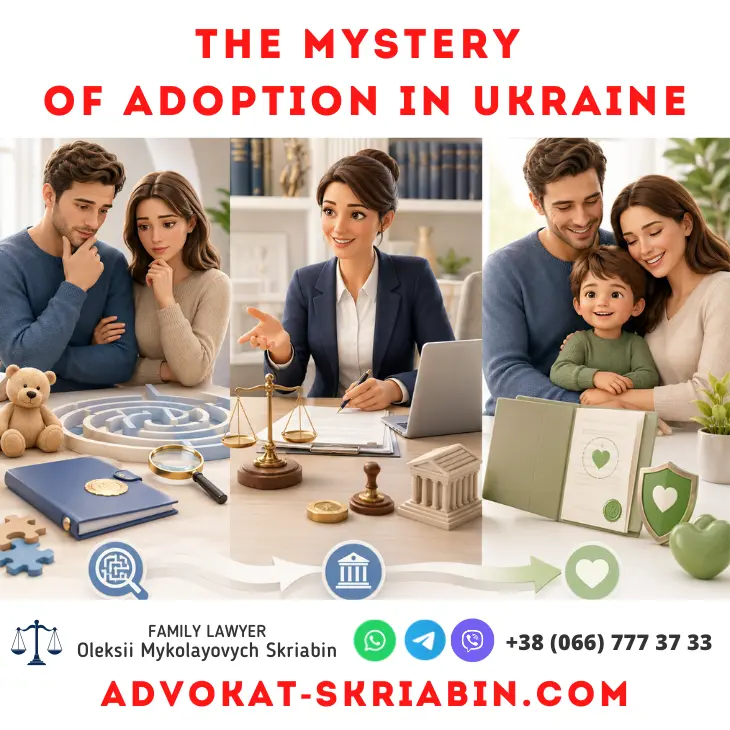

What Is the Mystery of Adoption in Ukraine
The mystery of adoption in Ukraine is a legal principle designed to protect information about the adoption process from unauthorized disclosure. It safeguards sensitive personal data concerning the child, adoptive parents, and the circumstances surrounding the adoption.
This concept exists to ensure family stability, protect the emotional well-being of the child, and respect private and family life. Adoption often involves deeply personal circumstances, and Ukrainian law recognizes the importance of keeping such information confidential.
The protection extends not only to adoption records but also to information learned by officials, judges, social workers, healthcare professionals, and other persons involved in adoption proceedings. In practice, confidentiality is especially important when families go through adoption of a child and want to protect the child from unnecessary emotional pressure.
Right to the Mystery of Adoption Under Ukrainian Law
The right to the mystery of adoption is recognized as an important element of family privacy. Ukrainian legislation establishes legal mechanisms aimed at preventing unauthorized disclosure of information relating to adoption.
This right belongs primarily to the adoptive parents and the adopted child. It ensures that decisions regarding disclosure are made within a legal framework and with consideration of the child’s best interests.
The purpose of the right is not to conceal wrongdoing but to protect family relationships from unnecessary interference. Courts and government authorities are expected to balance privacy rights with legitimate interests that may arise in specific situations. The main family law rules connected with adoption and confidentiality may be checked through the official legislation portal of Ukraine.
Who Has Access to Information About Adoption
One of the most common questions is who can know about adoption and under what circumstances. Access to adoption-related information is generally restricted and controlled by law. Certain authorities may access information when necessary for the performance of their official duties. This can include courts, child protection authorities, and other government institutions acting within their legal powers.
Private individuals, relatives, neighbors, employers, or third parties do not automatically receive access to adoption information. The existence of adoption records access restrictions is intended to prevent unnecessary disclosure and protect family privacy.
How Is Adoption Confidentiality Protected
Adoption confidentiality is protected through several legal and procedural safeguards. Information concerning adoption is treated as sensitive personal data and cannot be freely disclosed. Court proceedings involving adoption matters are often handled with special attention to privacy. Documents containing adoption information are subject to specific access restrictions and procedural protections.
The protection of adoption privacy also applies to individuals working in institutions that participate in adoption procedures. They are generally expected to preserve confidentiality and avoid unauthorized disclosure.
Can an Adopted Child Learn About Their Adoption
Questions regarding adopted child rights often arise when a child becomes older and wishes to understand their personal history. Ukrainian law seeks to balance the child’s interests with the privacy interests of adoptive families. The answer depends on various legal and factual circumstances. Age, maturity, family circumstances, and applicable legal provisions may influence how information is provided.
In modern legal practice, increasing attention is paid to the child’s identity and personal development. Therefore, discussions concerning access to information are often evaluated through the lens of the child’s best interests rather than through an absolute approach.
When Can the Mystery of Adoption Be Disclosed
Although confidentiality is strongly protected, there are situations in which disclosure may be permitted or required by law. The disclosure of adoption confidentiality is not automatically prohibited in every circumstance.
Courts may examine requests involving competing rights or legitimate interests. Certain legal proceedings may require the consideration of adoption-related information where it is directly relevant to the matter under review.
At the same time, disclosure is usually approached cautiously. Authorities are expected to limit the scope of information revealed and ensure that disclosure remains proportionate to the legal purpose involved.
Liability for Disclosure of Adoption Confidentiality
Unauthorized disclosure of adoption confidentiality can result in legal consequences. The law recognizes that revealing protected adoption information may cause emotional harm, family conflict, and violations of privacy rights.
Depending on the circumstances, individuals responsible for disclosure may face disciplinary, civil, administrative, or other forms of liability. Each situation is assessed individually based on the facts involved. The existence of liability serves both a protective and preventive function. It encourages institutions and individuals to handle adoption-related information responsibly.
Rights of Adoptive Parents and Protection of Privacy
Adoptive parents have important legal rights connected with the protection of adoption privacy. These rights help ensure that family life can develop without unwarranted interference. Privacy protection includes safeguards against unauthorized access to personal information and unlawful disclosure of adoption details.
Adoptive parents may seek legal remedies if their rights are violated. When disputes arise, courts often consider the interests of the child alongside the privacy interests of the adoptive family. The primary goal remains the protection of family stability and well-being.
Access to Adoption Documents and Court Records
The issue of adoption records access is often misunderstood. Not all documents related to adoption are available for public inspection. Access rules depend on the nature of the document, the identity of the requesting person, and the legal grounds for obtaining information. Courts and authorities generally apply confidentiality requirements when handling adoption records.
Individuals seeking access must usually demonstrate a legitimate legal basis. Even when access is permitted, disclosure may be limited to what is necessary in the specific circumstances. If a person needs procedural documents or proof of judicial consideration, the issue may be connected with a court decision on adoption and the rules for obtaining or using such documents.
Adoption and the Child’s Right to Know Their Origin
The relationship between confidentiality and identity is a complex legal issue. Many discussions concerning adopted child rights focus on whether a child should be able to learn information about their origins.
International legal developments increasingly recognize that personal identity may include knowledge about one’s biological background. However, this interest must be balanced against privacy protections and family interests. Each case may involve different considerations. Courts often evaluate the specific circumstances rather than applying a single universal rule.
How Courts Protect the Mystery of Adoption in Ukraine
Courts play a central role in protecting the mystery of adoption in Ukraine. Judicial procedures are designed to safeguard confidential information while ensuring fair legal proceedings. When adoption-related disputes arise, judges may restrict access to sensitive materials, protect personal data, and prevent unnecessary public disclosure. Courts also provide remedies when privacy violations occur. Through judicial protection, individuals may seek recognition of violations and appropriate legal responses.
Violation of Adoption Confidentiality: Legal Consequences
A violation of adoption confidentiality may have significant legal implications. The seriousness of the consequences often depends on the extent of the disclosure and the resulting harm. Unauthorized disclosure can affect family relationships, the child’s emotional well-being, and the trust placed in institutions responsible for handling sensitive information.
For this reason, legal systems place considerable emphasis on maintaining confidentiality and addressing violations when they occur. In more complex situations, unlawful disclosure may also arise together with disputes about cancellation of adoption or other sensitive family law proceedings.
International Standards on Adoption Confidentiality
International human rights principles recognize the importance of private and family life. These standards influence how countries approach protection of adoption privacy and confidentiality. International practice generally seeks to balance privacy rights with the interests of children in understanding their identity and personal history. As legal systems evolve, greater attention is being given to achieving a fair balance between confidentiality and access to information in adoption-related matters.
Legal Assistance in Cases Involving Adoption Privacy
Legal issues involving adoption confidentiality can be complex and emotionally sensitive. Professional legal guidance may help individuals understand their rights and available options. A lawyer for adoption cases can assess the circumstances, explain applicable legal protections, and assist with requests involving access to information or privacy violations. In many situations, families first need a detailed family lawyer consultation to understand whether disclosure was lawful and what steps should be taken next.
If court proceedings become necessary, legal representation may help protect the interests of adoptive parents, adopted children, or other affected persons. A lawyer represents the client’s interests on the basis of a legal assistance agreement, which may be concluded online. A power of attorney is not required for this purpose.
Step-by-Step Guide
- Determine the specific issue involving adoption confidentiality.
- Identify whether the matter concerns access to information, disclosure, or privacy protection.
- Gather available documents and relevant evidence.
- Review applicable provisions of adoption law in Ukraine.
- Contact the appropriate authority or seek professional legal advice.
- If necessary, prepare a formal request or court application.
- Protect personal data throughout the process and keep records of communications.
Phone / Viber / WhatsApp / Telegram: +380667773733
Email: skriabinadvokat@gmail.com