- What Are the Conditions for Adopting a Child by Foreigners in Ukraine
- Who Can Adopt a Child in Ukraine as a Foreign Citizen
- Which Children Can Be Adopted by Foreigners in Ukraine
- Requirements for Foreigners Seeking to Adopt a Ukrainian Child
- Documents Required for Adoption by Foreign Citizens
- How Does the International Adoption Procedure in Ukraine Work
- Role of the National Social Service in International Adoption
- Adoption of a Child by Relatives Who Are Foreign Citizens
- Can Foreigners Adopt a Child in Ukraine During Martial Law
- Court Procedure for Adoption of a Child by Foreigners
- Does an Adopted Child Retain Ukrainian Citizenship
- Rights and Legal Protection of an Adopted Child
- Common Reasons Why Adoption Applications Are Rejected
- How Long Does the Adoption Process for Foreigners Take
- Legal Assistance for International Adoption in Ukraine
- Step-by-Step Guide
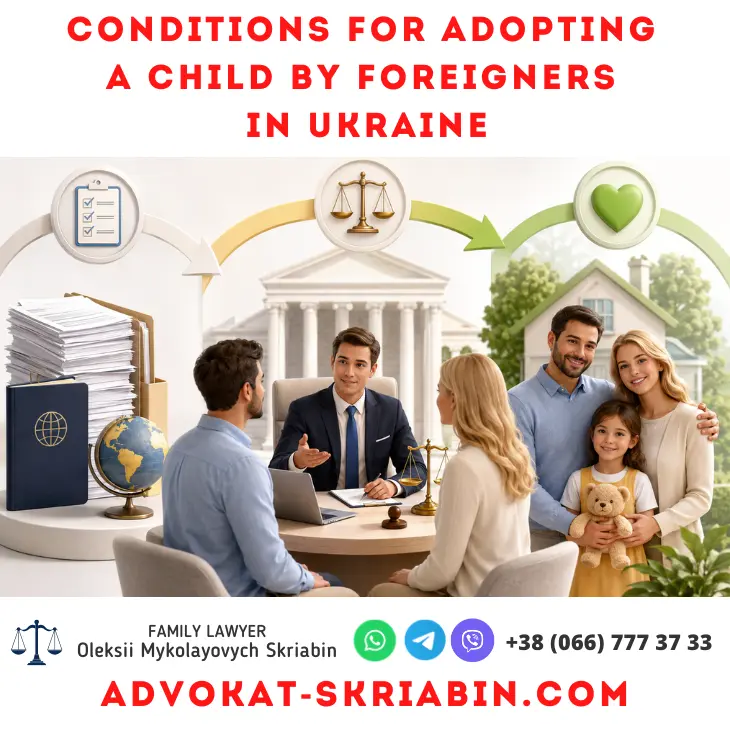
What Are the Conditions for Adopting a Child by Foreigners in Ukraine
The conditions for adopting a child by foreigners in Ukraine are established by Ukrainian family legislation and international child protection principles. The primary goal of every adoption procedure is to ensure the best interests of the child rather than satisfy the wishes of prospective adoptive parents.
Before a foreign citizen can proceed with the adoption of a Ukrainian child by foreigners, Ukrainian authorities must determine whether adoption by Ukrainian citizens is possible. International adoption is generally considered only when national placement options have been exhausted or when specific legal exceptions apply.
Foreign applicants must demonstrate stable financial circumstances, suitable living conditions, good health, and the ability to provide a safe family environment. Authorities also examine the applicant’s personal history, criminal background, and motivation for adoption. The adoption of a child by foreigners in Ukraine is subject to strict state supervision to ensure that children’s rights remain fully protected throughout the entire process.
Who Can Adopt a Child in Ukraine as a Foreign Citizen
A foreign citizen may adopt a child in Ukraine if they satisfy legal eligibility requirements and can prove their ability to provide proper care and upbringing. Married couples frequently apply together, although certain legal systems may allow individual applicants under specific circumstances.
When reviewing an application for adoption of a Ukrainian citizen child by a foreigner, authorities consider the applicant’s age, legal capacity, health status, family circumstances, and social stability. The ability to maintain a secure and supportive environment for the child is a key consideration.
Applicants must not have convictions or circumstances that would indicate a risk to the child. Ukrainian authorities carefully verify information provided by foreign citizens adopting children in Ukraine before approving any adoption. In practice, applicants often need a valid certificate of no criminal record as part of the broader document package. In every case, the child’s welfare remains the most important factor during the decision-making process.
Which Children Can Be Adopted by Foreigners in Ukraine
Not every child may immediately become the subject of international adoption in Ukraine. A child must have the legal status that permits adoption under Ukrainian law. In many situations, the child may be orphaned, deprived of parental care, or otherwise eligible for placement through the adoption system. State authorities verify all circumstances before a child is included in adoption databases.
The procedure for adoption by a foreign citizen often requires confirmation that domestic adoption opportunities have been considered. Certain exceptions may exist when foreign relatives seek adoption or when other specific legal grounds apply. The age, health condition, family connections, and personal circumstances of the child may influence how the adoption process proceeds.
Requirements for Foreigners Seeking to Adopt a Ukrainian Child
The requirements for foreigners to adopt a child include legal, social, financial, and personal criteria. Applicants must prove that they can provide a stable family environment and meet the child’s emotional, educational, and developmental needs.
Authorities evaluate housing conditions, income sources, family relationships, and the applicant’s readiness to assume long-term parental responsibilities. Evidence from foreign authorities often forms part of this assessment.
International adoption in Ukraine involves cooperation between Ukrainian institutions and competent authorities in the applicant’s country of residence. This cooperation helps verify information and ensure compliance with international child protection standards. Applicants should prepare carefully because incomplete information may significantly delay the review process.
Documents Required for Adoption by Foreign Citizens
The documents required for adoption by foreigners are among the most important aspects of the entire procedure. Every document must usually be properly legalized, translated when necessary, and submitted in accordance with Ukrainian legal requirements.
Commonly requested documentation includes identification documents, proof of income, medical reports, evidence of suitable housing, family status documents, and certificates confirming the absence of criminal convictions.
Ukrainian authorities review each document carefully to verify the applicant’s suitability. Missing, inconsistent, or improperly prepared documents may result in requests for additional information. Because international adoption cases involve multiple jurisdictions, document preparation often requires significant attention to detail and legal compliance. If documents issued in Ukraine must later be used abroad, applicants may also need legalization and apostille of Ukrainian documents depending on the country where the documents will be submitted.
How Does the International Adoption Procedure in Ukraine Work
The international adoption in Ukraine process involves several stages that must be completed in the correct sequence. State authorities review the applicant’s eligibility, assess documentation, identify suitable child placement opportunities, and supervise compliance with legal requirements.
After preliminary review and registration procedures are completed, prospective adoptive parents may receive information about children who are legally available for adoption. Meetings and familiarization procedures may then follow.
When authorities determine that adoption serves the child’s best interests, the matter proceeds toward judicial review. The court ultimately decides whether the adoption should be approved. Throughout the process, child protection principles remain central to every decision.
Role of the National Social Service in International Adoption
The National Social Service plays a critical role in the adoption of a child by foreigners in Ukraine. It serves as one of the principal authorities responsible for reviewing applications, maintaining adoption records, and protecting children’s rights.
The agency verifies eligibility criteria, examines submitted documentation, and coordinates aspects of the international adoption procedure. Its work helps ensure that all legal safeguards are respected.
Before a court reviews an adoption case, the conclusions and evaluations of competent authorities may significantly influence the outcome. For this reason, accurate and complete documentation is extremely important. The National Social Service also helps monitor compliance with legal requirements established for international adoption cases.
Adoption of a Child by Relatives Who Are Foreign Citizens
Special legal considerations may apply when the applicant is a relative of the child. Adoption by relatives who are foreign citizens is often treated differently from unrelated international adoption cases.
Family relationships may be relevant when determining whether adoption is appropriate and in the child’s best interests. Courts and authorities examine the existing relationship between the child and the prospective adoptive parent.
The procedure for adoption by a foreign citizen who is related to the child may involve certain legal advantages or procedural distinctions, depending on the circumstances of the case. Nevertheless, authorities still perform a comprehensive review to ensure that the adoption promotes the child’s welfare and long-term stability.
Can Foreigners Adopt a Child in Ukraine During Martial Law
Martial law has created additional practical challenges for families considering the adoption of a Ukrainian child by foreigners. However, the existence of martial law does not automatically prohibit international adoption. Ukrainian authorities continue to prioritize the protection of children while maintaining legal safeguards within the adoption system.
Certain administrative procedures, document verification processes, and communication with state authorities may require additional time. Applicants should be prepared for possible procedural delays caused by security measures, relocation of institutions, or temporary operational restrictions.
Foreign citizens adopting children in Ukraine during martial law should carefully monitor official information published by Ukrainian authorities and ensure that all documents remain valid throughout the process. General family-law rules may also be checked through Ukrainian legislation on the official legislative portal of Ukraine.
Because legal requirements may be applied differently depending on the specific circumstances of a case, professional legal guidance is often helpful when navigating complex adoption matters during periods of national emergency.
Court Procedure for Adoption of a Child by Foreigners
The court procedure is one of the most important stages of the adoption of a child by foreigners in Ukraine. No adoption becomes legally effective until a Ukrainian court approves the application and issues the relevant decision.
The court reviews all submitted materials, evaluates whether legal requirements have been satisfied, and determines whether the adoption serves the best interests of the child. Judges may examine information regarding the applicant’s personal circumstances, financial stability, health condition, and ability to provide proper parental care.
The court also considers reports and conclusions prepared by competent authorities involved in the adoption process. These documents often play a significant role in the final decision. Once the court grants approval, the adoption acquires full legal effect and the adoptive parents obtain parental rights and responsibilities under applicable law. At this stage, the practical consequences of a court decision on adoption should be clearly understood before further registration or international document use.
Does an Adopted Child Retain Ukrainian Citizenship
Citizenship issues frequently arise in international adoption in Ukraine. Whether a child retains Ukrainian citizenship depends on the circumstances of the adoption and the applicable laws governing citizenship matters. In many situations, adoption itself does not automatically terminate the child’s Ukrainian citizenship. Additional legal procedures may be required before any change in citizenship status can occur.
Parents considering the adoption of a Ukrainian citizen child by a foreigner should obtain accurate legal information regarding citizenship rights, travel documents, and possible dual nationality issues. Because citizenship matters often involve both Ukrainian law and the laws of another country, careful legal analysis is necessary before making long-term decisions.
Rights and Legal Protection of an Adopted Child
The legal system places significant emphasis on protecting the rights of adopted children. After the adoption is completed, the child generally receives the same legal status as a biological child within the adoptive family.
An adopted child is entitled to parental care, education, healthcare, emotional support, inheritance rights, and legal protection. These rights exist regardless of whether the child remains in Ukraine or relocates abroad following adoption.
The adoption of a child by foreigners in Ukraine is carefully regulated because authorities seek to ensure that children are protected not only during the adoption procedure but also throughout their future lives.
Courts and administrative authorities therefore examine every case with particular attention to the child’s safety, development, and long-term welfare. In sensitive family matters, legal protection may also relate to determining the child’s place of residence when the child’s future living arrangements require separate legal assessment.
Common Reasons Why Adoption Applications Are Rejected
Not every application for adoption by foreigners receives approval. Understanding the most common reasons for rejection can help applicants avoid unnecessary complications. Applications may be refused when documentation is incomplete, inaccurate, inconsistent, or insufficient to establish eligibility. Authorities may also deny an application if concerns exist regarding financial stability, living conditions, health issues, or the applicant’s ability to provide proper parental care.
Another common reason involves failure to comply with procedural requirements established for international adoption in Ukraine. Even minor procedural mistakes can lead to delays or negative outcomes if they are not corrected in a timely manner. Applicants should therefore approach the process carefully and ensure that every requirement is satisfied before submission.
How Long Does the Adoption Process for Foreigners Take
Many prospective parents ask how long the process for adoption of a Ukrainian child by foreigners will require. Unfortunately, there is no universal timeframe because every case depends on its specific circumstances.
The duration may be influenced by document preparation, legalization procedures, verification processes, administrative reviews, court schedules, and international cooperation between authorities.
Cases involving relatives may proceed differently from unrelated adoptions. Additional factors such as citizenship matters, special child protection requirements, or procedural corrections may also affect timing. Applicants should approach the process with realistic expectations and understand that thorough legal review is intended to protect the child’s interests rather than create unnecessary obstacles.
Legal Assistance for International Adoption in Ukraine
International adoption cases frequently involve complex legal requirements, document preparation, communication with authorities, and court proceedings. Professional legal assistance can help families navigate these challenges more effectively.
Lawyers may assist with document review, preparation of applications, communication with state institutions, legal analysis of eligibility requirements, and representation during court proceedings when permitted by law. At the preparatory stage, many applicants benefit from a family lawyer consultation to understand legal risks, document requirements, and the expected sequence of actions.
Attention! If representation of the client’s interests is required during legal proceedings, the lawyer represents the client’s interests on the basis of a legal assistance agreement, which may be concluded online. A power of attorney is not required for this purpose. The Online Divorce Service also provides support in family law matters involving children, parental rights, court procedures, and related international family issues.
Step-by-Step Guide
- Determine whether you satisfy the basic conditions for adopting a child by foreigners in Ukraine, including age, legal capacity, health, and financial stability requirements.
- Collect the documents required for adoption by foreigners, including identification documents, family status records, financial evidence, medical certificates, and other supporting materials.
- Prepare translations, legalization documents, and certifications required for use before Ukrainian authorities.
- Submit the necessary materials to the competent authorities responsible for international adoption in Ukraine and complete the registration process.
- Review information regarding children who are legally eligible for adoption and participate in the required familiarization procedures.
- Complete all required administrative stages and prepare the court application for adoption approval. A properly prepared application for adoption of a child helps the court understand the legal grounds, family circumstances, and evidence supporting the request.
- Participate in the court procedure and obtain the judicial decision confirming the adoption of the child.
Phone / Viber / WhatsApp / Telegram: +380667773733
Email: skriabinadvokat@gmail.com