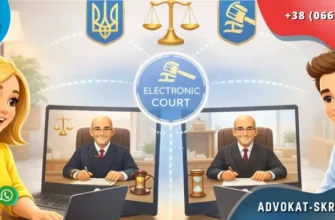
- Can You Divorce a Person Serving a Prison Sentence in Ukraine
- Divorce with a Prisoner: Legal Grounds and Requirements
- How to File for Divorce if Your Husband or Wife Is in Prison
- Divorce Through Court with an Imprisoned Spouse
- Is the Consent of the Convicted Person Required for Divorce
- What Documents Are Needed for Divorce with a Prisoner
- How Are Divorce Documents Delivered to an Incarcerated Person?
- Online Divorce with a Person in Places of Deprivation of Liberty
- Can You Get Divorced Without the Prisoner’s Presence in Court
- How Long Does a Divorce with an Imprisoned Spouse Take
- Divorce if One Spouse Is in a Correctional Colony or Detention Center
- Child Custody and Child Support After Divorce with a Convicted Person
- Division of Property During Divorce with an Imprisoned Spouse
- Common Difficulties in Divorce Proceedings with a Prisoner
- Lawyer Assistance for Divorce with a Person Serving a Sentence

Can You Divorce a Person Serving a Prison Sentence in Ukraine
А marriage may be dissolved even if one spouse is serving a prison sentence in Ukraine. The fact that a husband or wife is in custody does not block the right of the other spouse to file for divorce. Ukrainian family law allows a spouse to ask the court to dissolve the marriage when family life has effectively ended and reconciliation is not realistic.
In practice, divorce with a prisoner is usually handled through court because the imprisoned spouse cannot freely appear before a civil registry office and the situation often requires proper notification through the institution where the person is held. The court checks whether the claim is correctly filed, whether the defendant has been notified, and whether the marriage can be legally dissolved.
Divorce with a person in places of deprivation of liberty may be emotionally difficult because the claimant often deals with stress, distance, children, property, or communication problems. A correctly prepared claim helps avoid delays and gives the court enough information to understand why the marriage should be dissolved within the procedure for terminating a marriage in Ukraine.
Divorce with a Prisoner: Legal Grounds and Requirements
The main legal ground is the actual breakdown of marital relations. The court does not require a spouse to prove moral guilt, criminal behavior, or detailed personal conflict. It is usually enough to explain that the spouses no longer live as a family, do not maintain marital relations, and that preserving the marriage contradicts the interests of at least one spouse.
Divorce with a convicted person is not a punishment and does not depend on the type of criminal conviction. The court considers the family-law issue separately from the criminal case. The sentence may matter only procedurally: the court must know where the defendant is located so that documents can be delivered properly.
According to the general approach of Ukrainian family legislation, the claimant should provide accurate information about the imprisoned spouse, including the known correctional institution or detention center. If the exact location is unknown, the lawyer may help clarify possible procedural steps before filing or during the court process.
How to File for Divorce if Your Husband or Wife Is in Prison
To file for divorce if your husband is in prison or if your wife is in prison, the claimant usually prepares a statement of claim and submits it to the competent Ukrainian court. The claim should identify both spouses, describe the marriage, explain why family life has ended, and state the request to dissolve the marriage.
The claimant should also attach proof of marriage, identity documents, confirmation of court fee payment where applicable, and available information about the imprisoned spouse. If children, property, or child support issues are involved, those issues may require separate claims or additional legal analysis.
A common mistake is to file a very short claim without explaining how the defendant can be notified. In cases involving an incarcerated person, proper delivery of documents is one of the most important procedural issues, so the list of divorce documents should be checked before filing. If the court cannot notify the defendant, the case may move slowly.
Divorce Through Court with an Imprisoned Spouse
Divorce through court with a convicted person follows the general civil procedure rules, but the court must take into account the defendant’s location in a penitentiary institution. The court opens proceedings, sends documents to the defendant, gives the person a chance to submit objections or explanations, and then considers whether the marriage should be dissolved.
The claimant does not always need to attend every hearing personally. If the documents are prepared correctly, the claimant may ask the court to consider the case without personal presence or may act through a lawyer. This is especially important for citizens of Ukraine who live abroad or cannot travel to the court. A lawyer may represent the client’s interests on the basis of a legal assistance agreement, which may be concluded online. No power of attorney is required for this representation.
Is the Consent of the Convicted Person Required for Divorce
The consent of the convicted person is not always required for divorce. If one spouse wants to end the marriage and proves that the family relationship has ended, the court may dissolve the marriage even if the imprisoned spouse does not agree.
However, the court must still respect the procedural rights of the defendant. This means the convicted person should receive court documents and have the opportunity to express a position. Silence, refusal to cooperate, or inability to appear in person does not automatically stop the divorce.
If the imprisoned spouse agrees with the divorce, the case may be simpler. If the person objects, the court evaluates whether the marriage has real prospects for continuation, and the situation may be treated similarly to divorce without consent. In many situations, the lack of a shared family life is enough to move the case forward.
What Documents Are Needed for Divorce with a Prisoner
For dissolution of marriage with a prisoner, the basic documents usually include a statement of claim, a marriage certificate or official extract confirming the marriage, a copy of the claimant’s passport or identity document, tax number if applicable, proof of court fee payment, and available information about the defendant’s place of detention.
If there are children, the claimant may also need birth certificates and information about the child’s place of residence. If the case involves property, debts, or support, additional documents may be needed, but these questions are often handled separately from the divorce itself.
Foreign-based Ukrainian citizens may need scans, electronic copies, consular documents, translations, or legalized documents depending on the situation. The key is to prepare documents in a form the Ukrainian court can accept.
How Are Divorce Documents Delivered to an Incarcerated Person?
Divorce documents are usually delivered to the imprisoned spouse through the institution where the person is held. The court sends procedural documents to the known address of the correctional colony, detention center, or other relevant institution. The administration then facilitates delivery according to internal rules.
This stage is important because the court must confirm that the defendant has been properly notified. If the address is wrong, incomplete, or outdated, the case may be delayed. That is why the claim should include all known information about the defendant’s location.
If the person is transferred to another institution, the court may need updated information. In some cases, the claimant or lawyer may submit a motion asking the court to request or clarify the defendant’s current location.
Online Divorce with a Person in Places of Deprivation of Liberty
Online divorce with a prisoner in Ukraine may be possible when documents are prepared remotely and submitted through electronic tools or by a lawyer. The claimant may not need to visit Ukraine personally if the procedural documents are complete and representation is organized correctly.
This option is especially useful for Ukrainians abroad, people living in another city, or clients who want to avoid unnecessary contact with the imprisoned spouse. An online divorce service can help structure the process, prepare the claim, explain document requirements, and support filing without personal attendance where legally possible.
Online filing does not mean the divorce happens automatically. The court still considers the case, sends documents to the defendant, and issues a decision. The advantage of remote divorce through the Electronic Court is that the claimant can manage the process more conveniently and with fewer logistical problems.
Can You Get Divorced Without the Prisoner’s Presence in Court
Іn many cases the court may consider a divorce without the prisoner’s physical presence in the courtroom. The key condition is proper notification. The defendant must be informed about the case and have a chance to submit a written position.
If the convicted person does not appear or cannot appear, this does not necessarily block the process. The court may continue consideration if procedural requirements are met. The claimant may also ask for the case to be reviewed without personal attendance.
The prisoner’s presence may become relevant if the court needs explanations or if there are connected disputes about children, property, or other sensitive issues. Even then, the court may use written explanations or other procedural mechanisms instead of requiring physical attendance, which is why divorce without presence is often an important procedural option.
How Long Does a Divorce with an Imprisoned Spouse Take
The duration depends on the court’s workload, correctness of the claim, delivery of documents to the imprisoned spouse, and whether the defendant objects. A simple divorce with a prisoner may move faster when the defendant’s location is known and all documents are prepared properly.
Delays often arise when the address of the correctional institution is unclear, the defendant is transferred, documents are returned, or the claim contains procedural mistakes. If children, property, or support issues are added to the same dispute, the process may also become longer.
The most practical way to avoid delays is to prepare the claim carefully from the beginning. The court should immediately understand who the parties are, where the defendant is located, why the marriage should be dissolved, and what exactly the claimant is asking the court to do; this is especially important when assessing realistic divorce timeframes.
Divorce if One Spouse Is in a Correctional Colony or Detention Center
Divorce if one spouse is in a correctional colony or detention center is still a civil family-law case. The main procedural difference is communication with the defendant. The court must deliver documents through the relevant institution and allow the person to respond.
A correctional colony usually means the person is serving a sentence. A detention center may mean the person is detained during criminal proceedings or in another procedural status. For divorce, the exact status matters less than the ability to identify the person’s location for notification.
The claimant should not wait until the sentence ends if the marriage has already broken down. Ukrainian law does not require a spouse to remain married only because the other spouse is imprisoned.
Child Custody and Child Support After Divorce with a Convicted Person
Divorce with a convicted person does not automatically decide child custody, residence, visitation, or child support. These matters may be resolved separately or together with related claims, depending on the circumstances and procedural strategy.
If the child lives with the claimant, the court may need information about the child’s actual residence and care. If child support is needed, the convicted parent’s income, employment in the institution, property, or other sources may become relevant. Even imprisonment does not automatically remove parental responsibilities.
The main principle is the child’s best interests. If communication with the convicted parent is unsafe, impossible, or emotionally harmful, this should be assessed carefully. A divorce case should not be overloaded with additional disputes unless it is procedurally useful.
Division of Property During Divorce with an Imprisoned Spouse
Division of property during divorce with an imprisoned spouse may be handled separately from the divorce itself. This is often practical because property disputes require evidence, valuation, documents, and sometimes additional parties or expert assessment.
The fact that one spouse is imprisoned does not automatically deprive that spouse of property rights. Joint marital property may still need legal division unless the parties reach an agreement or there are grounds to prove that specific property is personal.
If there are risks that property may be hidden, sold, transferred, or affected by enforcement proceedings, legal strategy should be prepared before filing. Divorce and division of property of spouses may have different goals, timelines, and evidence requirements.
Common Difficulties in Divorce Proceedings with a Prisoner
The most common difficulties are incorrect court jurisdiction, lack of information about the defendant’s place of detention, problems with delivery of documents, incomplete evidence, and emotional pressure from relatives or the imprisoned spouse.
Another common issue is combining too many claims in one case. Divorce, child support, child residence, and property division may be connected, but filing everything together is not always the fastest solution. Sometimes the divorce should be completed first, while other disputes are prepared separately.
A claimant living abroad may face additional difficulties with documents, translations, electronic signatures, or communication with the Ukrainian court. These issues can usually be managed, but they should be planned before filing the claim.
Lawyer Assistance for Divorce with a Person Serving a Sentence
A lawyer for divorce with a prisoner helps assess jurisdiction, prepare the claim, organize evidence, submit documents, communicate with the court, and monitor whether the imprisoned spouse has been properly notified. This is especially useful when the claimant lives abroad or wants to avoid personal attendance.
Legal assistance is also important when there are children, property, unpaid support, threats, or uncertainty about the defendant’s location. A lawyer can separate the divorce issue from related disputes and choose the most efficient procedural path.
At the final stage, the lawyer can help receive the court decision, explain when it becomes legally effective, and advise whether additional documents are needed for use in Ukraine or abroad. The online divorce service may support the client from the first consultation to completion of the court process.
Step-by-step guide: how to divorce a prisoner in Ukraine
- Clarify the imprisoned spouse’s location: correctional colony, detention center, or other institution.
- Prepare documents confirming the marriage, identity, and grounds for divorce.
- Draft a statement of claim with correct procedural details and court request.
- Pay the required court fee or check whether any exemption may apply.
- Submit the claim to the competent Ukrainian court, including online options where available.
- Monitor delivery of documents to the imprisoned spouse and respond to court requests.
- Receive the court decision and check when it becomes legally effective.
Useful materials on the site advokat-skriabin.com
- How to obtain information from the State Register of Real Property Rights to Real Estate
- Procedure for obtaining a certificate of ownership
- Property ownership statement through a lawyer
- Legalization of documents for China
- Legalization of documents for France
- Legalization of documents for Portugal
- Legalization of documents for Georgia
- Legalization of documents for Italy
- Legalization of documents for Spain
- Legalization of documents for the Czech Republic