- Child Abandonment and Relinquishment of Parental Rights in Ukraine
- Is Child Abandonment Legally Possible in Ukraine
- Can a Parent Voluntarily Relinquish Parental Rights
- Difference Between Child Abandonment and Termination of Parental Rights
- How to Relinquish Paternity in Ukraine: Legal Procedure
- Contesting Paternity Through Court and DNA Evidence
- Grounds for Termination of Parental Rights in Ukraine
- Who Can File a Claim for Termination of Parental Rights
- Documents Required for Termination of Parental Rights
- Does Relinquishment of Parental Rights Cancel Child Support
- Child Support Obligations After Loss of Parental Rights
- Voluntary Consent to Child Adoption by a Stepparent
- Can a Mother Relinquish Rights to a Child
- Can a Father Relinquish Rights After Divorce
- Legal Consequences of Losing Parental Rights
- Can Parental Rights Be Restored After Termination
- Step-by-Step Instruction
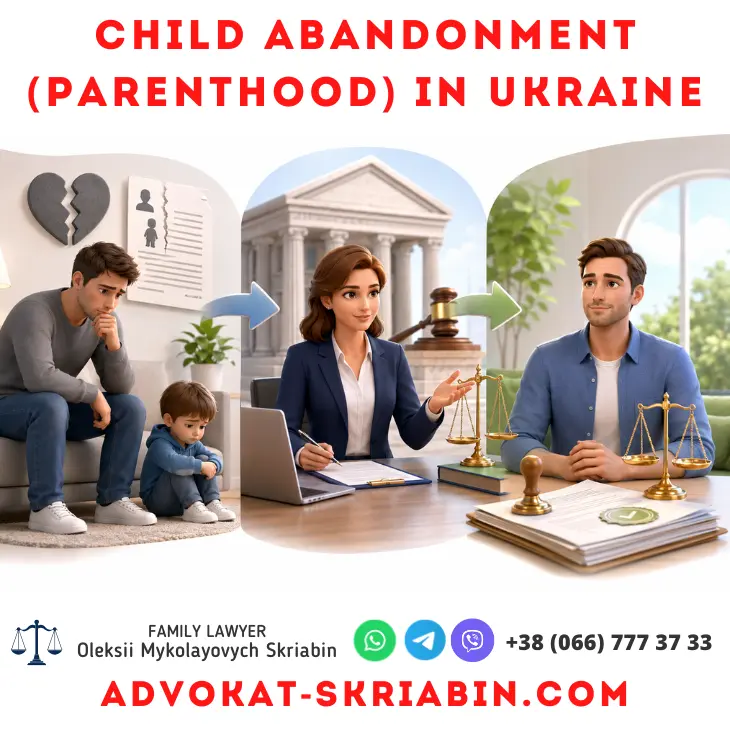
Child Abandonment and Relinquishment of Parental Rights in Ukraine
Family conflicts involving children are among the most emotionally difficult legal situations. Many parents ask whether child abandonment in Ukraine is legally possible, whether they can sign a document and permanently refuse parental responsibilities, or whether relinquishment of parental rights automatically ends child support obligations.
For Ukrainians living in Ukraine and abroad, these questions often arise after divorce, remarriage, relocation, or disputes regarding paternity. Understanding the difference between voluntary consent, court procedures, adoption, and the termination of parental rights in Ukraine is essential before making any legal decisions.
Our online legal service regularly assists parents who need guidance regarding voluntary relinquishment of parental rights, relinquishment of paternity, child support obligations, and court proceedings related to parental rights. Each case requires an individual legal assessment because the consequences may affect both the parent and the child for many years.
Is Child Abandonment Legally Possible in Ukraine
In everyday language, people often speak about abandoning a child or giving up parental rights. However, Ukrainian law does not provide a simple procedure that allows a parent to walk away from parental responsibilities by signing a declaration.
A parent cannot simply decide to stop being a mother or father. Even if communication with the child ends, parental responsibilities generally remain in force until a court makes a decision or another legal mechanism, such as adoption, changes the legal relationship.
As a result, child abandonment in Ukraine is not considered a lawful method of ending parental status. Attempts to avoid responsibilities may instead become grounds for court proceedings concerning parental rights.
Can a Parent Voluntarily Relinquish Parental Rights
Many parents search for information about how to relinquish parental rights voluntarily. In practice, a parent may express consent to certain legal actions, but parental rights usually cannot be terminated solely by personal choice. The court always considers the best interests of the child. Even when both parents agree, a judicial decision is often required before parental rights can be terminated.
A voluntary statement may become relevant when a child is going to be adopted or when another legal procedure requires parental consent. Nevertheless, voluntary relinquishment of parental rights alone does not automatically end legal obligations.
Difference Between Child Abandonment and Termination of Parental Rights
The concepts are frequently confused, but they have very different legal meanings. Child abandonment usually refers to a parent refusing to care for a child or failing to fulfill parental duties. This behavior may create legal consequences and can become evidence in court proceedings.
Deprivation of parental rights is a formal legal procedure resulting from a court decision. The court evaluates evidence, examines the circumstances, and determines whether termination is justified and consistent with the child’s interests. The distinction is important because one is behavior, while the other is a legal status established through judicial proceedings.
How to Relinquish Paternity in Ukraine: Legal Procedure
Questions regarding relinquishment of paternity commonly arise when a person believes that they are not the biological father of a child. Ukrainian law generally does not allow a person to simply renounce fatherhood because they no longer wish to maintain a parental relationship. Instead, legal procedures focus on determining whether paternity was correctly established.
If there are valid reasons to doubt biological parentage, court proceedings may be initiated. The court examines evidence and may order genetic testing to determine whether the legal father is also the biological father. The outcome depends on the facts of the case, available evidence, and procedural requirements.
Contesting Paternity Through Court and DNA Evidence
When a person believes paternity was incorrectly recorded, contesting paternity in Ukraine may be possible through judicial proceedings. Courts often consider documentary evidence, witness statements, and scientific examinations. A DNA test for paternity dispute is frequently the most persuasive form of evidence because it can provide objective information regarding biological parentage.
If the court concludes that paternity was established incorrectly, legal records may be amended. In related family disputes, a parent may also need professional assistance with contesting paternity when preparing evidence, procedural documents, and a legal position for court. For Ukrainians living abroad, participation in such proceedings may often be organized remotely through legal representation.
Grounds for Termination of Parental Rights in Ukraine
Courts do not terminate parental rights automatically. Specific legal grounds must be proven. Examples may include persistent failure to fulfill parental duties, abuse of parental authority, harmful treatment of a child, chronic neglect, or other serious circumstances affecting the child’s welfare.
The court evaluates not only parental behavior but also the overall impact on the child. The child’s interests remain the central consideration throughout the proceedings. Because these cases are highly sensitive, detailed preparation and evidence collection are usually essential.
Who Can File a Claim for Termination of Parental Rights
Not every person may initiate such proceedings. Depending on the circumstances, claims may be filed by another parent, a guardian, a custodian, child protection authorities, a prosecutor, or other persons authorized by law.
The court then reviews whether legal grounds exist and whether the requested outcome serves the child’s interests. When a parent resides abroad, legal representation can often simplify communication with authorities and court participation. The general family-law framework is based on the Family Code of Ukraine, which regulates parental rights, child support, adoption, and court protection of family rights.
Documents Required for Termination of Parental Rights
The required documents vary according to the circumstances of the case. Typically, courts may consider identification documents, birth certificates, evidence concerning parental conduct, documents from educational or medical institutions, and materials prepared by child protection authorities.
Additional evidence may include correspondence, financial records, witness statements, and court decisions from previous proceedings involving the child. Proper document preparation significantly influences the efficiency and outcome of the case.
Does Relinquishment of Parental Rights Cancel Child Support
One of the most common misconceptions is that relinquishment of parental rights automatically eliminates financial obligations. In reality, termination of parental rights and child support are separate legal issues. A parent may lose certain parental rights while remaining financially responsible for the child.
The child’s right to financial support is protected independently from the parent’s legal status. Therefore, termination does not necessarily erase existing obligations. Anyone considering legal action should carefully evaluate the long-term financial consequences before proceeding.
Child Support Obligations After Loss of Parental Rights
Questions regarding child support after termination of parental rights arise frequently after divorce or family restructuring. The loss of parental rights generally affects participation in the child’s upbringing, decision-making, and certain family rights. However, financial responsibilities often continue because support is intended to protect the child rather than the parent.
Courts prioritize the child’s welfare when addressing maintenance issues. Consequently, a parent may remain obligated to provide support even after losing parental rights. This principle prevents children from being deprived of necessary financial assistance. If maintenance is disputed or unpaid, the legal approach may depend on the procedure for collecting alimony for a child and the available enforcement mechanisms.
Voluntary Consent to Child Adoption by a Stepparent
One situation where parents frequently discuss voluntary relinquishment of parental rights is when a child is being adopted by a stepparent. After remarriage, a biological parent may wish to allow the spouse of the other parent to become the child’s legal parent.
In such situations, a parent may provide consent to child adoption by stepparent. However, the adoption process still requires compliance with legal procedures and approval by the competent authorities and court where required.
The primary consideration remains the child’s best interests. The court evaluates whether the adoption will provide stability, security, and proper care for the child. A properly completed adoption process can create a new legal parent-child relationship while changing the legal status of the biological parent. In practice, families often need support with adoption of a child when preparing documents and confirming that the procedure protects the child’s interests.
Can a Mother Relinquish Rights to a Child
Many people assume that only fathers face questions regarding parental rights, but mothers may also become involved in such proceedings. A mother cannot simply submit a statement and cease being a legal parent. Like fathers, mothers remain subject to legal obligations unless a court decision or another lawful procedure changes their status.
If serious circumstances exist, a court may consider termination of parental rights. However, the burden of proof remains significant because courts prioritize the protection of children. Each case is evaluated individually, taking into account the child’s living conditions, safety, emotional well-being, and future interests.
Can a Father Relinquish Rights After Divorce
Divorce often creates misunderstandings regarding parental rights and responsibilities. A father may believe that after divorce he can voluntarily terminate his parental relationship with the child. In reality, divorce itself does not affect parental status. The father remains a legal parent with corresponding rights and obligations.
Questions about how to relinquish parental rights after divorce usually require a detailed legal analysis of the circumstances, including potential adoption proceedings, paternity disputes, or court actions regarding parental rights.
Importantly, termination of parental rights and termination of child support obligations are not the same legal issue. When the dispute arises after divorce, the parent may also need to assess alimony after divorce separately from the issue of parental status.
Legal Consequences of Losing Parental Rights
The consequences of losing parental rights are significant and often permanent. A parent who loses parental rights may no longer participate in decisions concerning the child’s upbringing, education, residence, healthcare, and other important matters. Certain inheritance and family-law consequences may also arise.
At the same time, losing parental rights does not necessarily eliminate financial obligations toward the child. Courts generally seek to ensure that children remain financially protected regardless of changes in parental status.
Before initiating any legal procedure, parents should fully understand both the immediate and long-term effects of a court decision. If a lawyer represents a client in such proceedings, it is important to remember that: A lawyer represents the client’s interests on the basis of a legal assistance agreement, which may be concluded online. A power of attorney is not required for this purpose.
Can Parental Rights Be Restored After Termination
In certain situations, restoration of parental rights may be possible. The court evaluates whether the circumstances that originally justified termination have changed. Evidence of improved living conditions, responsible behavior, stable income, and a genuine commitment to the child’s welfare may become relevant.
The restoration process is not automatic. The court must determine that restoring parental rights serves the child’s best interests and does not create risks to the child’s development. Because every situation is unique, professional legal guidance is often beneficial before filing an application for restoration.
Step-by-Step Instruction
- Determine the legal issue involved. Identify whether the matter concerns child abandonment in Ukraine, relinquishment of paternity, adoption, child support, or termination of parental rights in Ukraine.
- Collect all relevant documents, including birth certificates, court decisions, parental records, and any evidence supporting your position.
- Evaluate whether paternity is disputed. If biological parentage is questioned, consider whether contesting paternity in Ukraine may be appropriate.
- Obtain supporting evidence. Depending on the case, this may include witness statements, official records, or a DNA test for paternity dispute.
- Prepare and file the necessary court application or adoption-related documents through the competent authority.
- Participate in court proceedings personally or through legal representation if permitted by law. For Ukrainians who cannot attend in person, online participation of a lawyer in family cases may help organize court communication and procedural representation.
- Follow the court’s decision and complete any additional legal procedures required by the final ruling.
Phone / Viber / WhatsApp / Telegram: +380667773733
Email: skriabinadvokat@gmail.com