
- Cancellation of Adoption in Ukraine: Procedure, Grounds and Consequences
- What Is Cancellation of Adoption in Ukraine
- When Can an Adoption Be Cancelled Under Ukrainian Law
- Grounds for Cancellation of Adoption Through Court
- Who Has the Right to File a Claim for Cancellation of Adoption
- Cancellation of Adoption vs Recognition of Adoption as Invalid
- Can Adoption Be Cancelled After the Child Reaches Adulthood
- What Documents Are Required for Cancellation of Adoption
- How Does the Court Procedure for Cancellation of Adoption Work
- What Evidence Is Important in Adoption Cancellation Cases
- Legal Consequences of Cancellation of Adoption in Ukraine
- Restoration of Rights of Biological Parents After Adoption Cancellation
- Court Practice on Cancellation of Adoption in Ukraine
- How Long Does a Cancellation of Adoption Case Take
- Lawyer Assistance in Adoption Cancellation Cases
- How to Prepare a Claim for Cancellation of Adoption
- Step-by-Step Instruction
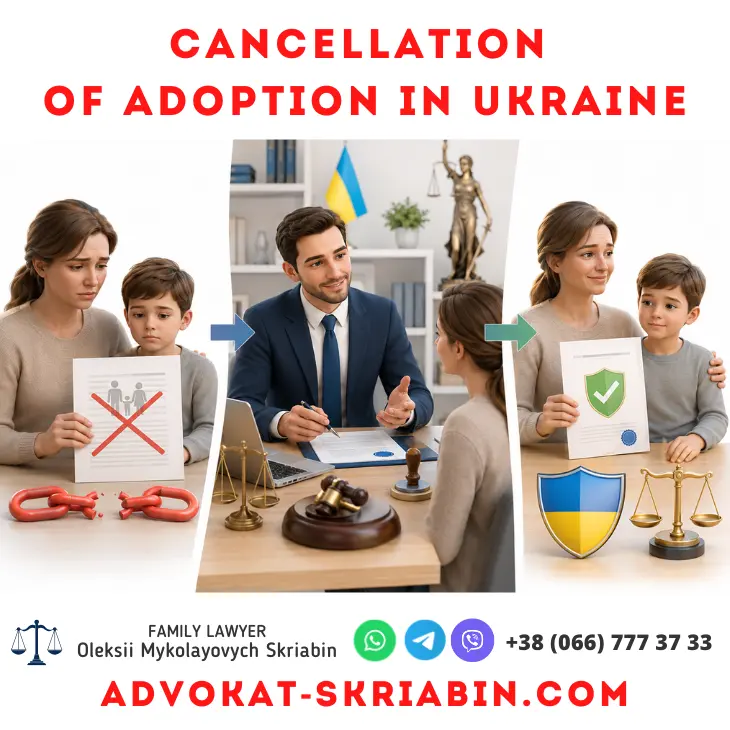

Cancellation of Adoption in Ukraine: Procedure, Grounds and Consequences
The issue of cancellation of adoption in Ukraine is one of the most complex categories of family law cases. Adoption creates legal family ties between the adoptive parent and the child, granting rights and obligations similar to those existing between biological parents and children. However, in exceptional situations, Ukrainian law allows the cancellation of adoption through court proceedings.
For many families, such cases involve emotional stress, complicated family circumstances, and uncertainty regarding future legal consequences. Understanding the adoption cancellation procedure, the available legal grounds, and the court process helps individuals make informed decisions and avoid procedural mistakes.
Our online legal service assists Ukrainian citizens living both in Ukraine and abroad with family law matters, including adoption disputes, preparation of court documents, and representation during judicial proceedings.
What Is Cancellation of Adoption in Ukraine
Cancellation of adoption is a legal procedure through which a court terminates the rights and obligations that arose between an adoptive parent and an adopted child. Once the court decision becomes effective, the legal relationship created by adoption ceases to exist.
The purpose of this mechanism is not to punish either party but to protect the best interests of the child when the adoption no longer serves those interests or when circumstances make continuation of the family relationship impossible.
Unlike ordinary family disputes, a court cancellation of adoption requires careful examination of all circumstances because courts prioritize the welfare and rights of the child above all other considerations.
When Can an Adoption Be Cancelled Under Ukrainian Law
Ukrainian family legislation allows adoption to be cancelled only in exceptional circumstances, and the general legal framework can be checked through the official family legislation of Ukraine. Courts do not grant such claims automatically and always assess whether cancellation truly corresponds to the child’s interests.
The court evaluates the living conditions, relationship between the parties, psychological factors, and the possibility of preserving family ties. Mere disagreements or temporary conflicts are usually insufficient to justify cancellation. When reviewing a request to cancel adoption in Ukraine, judges consider both current circumstances and the long-term impact that the decision may have on the child.
Grounds for Cancellation of Adoption Through Court
The grounds for cancellation of adoption must be substantial and supported by convincing evidence. Courts generally require proof that maintaining the adoption relationship is no longer beneficial or possible.
Examples may include severe conflicts between the adoptive parent and the child, situations where family relationships have effectively ceased to exist, or circumstances that negatively affect the child’s welfare and development.
Each case is assessed individually. Therefore, a successful claim for cancellation of adoption depends not only on the existence of legal grounds but also on the quality of evidence presented to the court.
Who Has the Right to File a Claim for Cancellation of Adoption
The right to initiate proceedings belongs to persons whose rights or interests are directly connected with the adoption relationship. Depending on the circumstances, different participants may seek judicial protection.
The court also considers the age and legal capacity of the adopted person. In certain situations, state authorities responsible for protecting children’s rights may become involved in the proceedings, especially where the earlier adoption of a child created legal ties that now require court review. Because standing to file a claim for cancellation of adoption depends on specific facts, legal analysis is often necessary before submitting court documents.
Cancellation of Adoption vs Recognition of Adoption as Invalid
Many people confuse cancellation of adoption with recognition of adoption as invalid, although these legal mechanisms have different purposes. Cancellation concerns situations where the adoption was initially lawful but later circumstances justify termination of the legal relationship. Recognition of adoption as invalid focuses on defects that existed at the moment the adoption was established.
The legal consequences, procedural requirements, and evidence needed for these two categories of cases may differ significantly. Proper qualification of the claim is therefore essential before initiating court proceedings.
Can Adoption Be Cancelled After the Child Reaches Adulthood
One of the most common questions in family law practice is whether a person can seek cancellation of adoption in Ukraine after the adopted child becomes an adult. Ukrainian legislation allows such cases in limited circumstances, but the court will carefully assess whether there are sufficient legal grounds and whether the cancellation serves a legitimate purpose.
The fact that a child has reached adulthood does not automatically prevent a court from considering the matter. However, judges usually pay special attention to the duration of the family relationship, the actual existence of family ties, and the legal consequences that may follow from terminating the adoption.
In adult adoption cancellation disputes, courts often analyze whether the relationship between the parties has effectively ceased to exist and whether maintaining the legal status created by adoption no longer reflects reality. Each case is highly individual and requires a detailed legal assessment.
What Documents Are Required for Cancellation of Adoption
The success of an adoption cancellation procedure largely depends on the completeness and quality of the documents submitted to the court. Proper preparation helps avoid delays and procedural complications.
In most situations, the claimant should provide documents confirming the adoption, personal identification documents, evidence supporting the stated grounds for cancellation, and any materials demonstrating why continuation of the adoption relationship is not in the child’s best interests.
Depending on the circumstances, the court may also require additional documents from state authorities, educational institutions, medical facilities, or guardianship bodies. If the dispute is connected with earlier court materials, it may be necessary to analyze the court decision on adoption and related documents before filing a new claim.
How Does the Court Procedure for Cancellation of Adoption Work
A court cancellation of adoption begins with the preparation and filing of a properly drafted statement of claim. The court first reviews whether the claim meets procedural requirements before opening proceedings.
After the case is accepted, the court examines written evidence, hears explanations from the parties, and may involve guardianship and child protection authorities. In certain cases, expert opinions may also be considered.
The court’s primary objective is to determine whether cancellation of the adoption genuinely serves the interests of the child and whether sufficient legal grounds exist. Only after a comprehensive review of all circumstances will a final decision be issued.
What Evidence Is Important in Adoption Cancellation Cases
Evidence plays a decisive role in any claim for cancellation of adoption. Courts require objective proof rather than assumptions or emotional statements. Relevant evidence may include documents, witness testimony, expert evaluations, correspondence, records from educational institutions, medical reports, and other materials demonstrating the actual relationship between the parties. The stronger and more consistent the evidence, the greater the likelihood that the court will be able to establish the factual circumstances necessary for a lawful and justified decision.
Legal Consequences of Cancellation of Adoption in Ukraine
The legal consequences of adoption cancellation are significant because they affect family status, personal rights, and legal obligations. Once the court decision becomes effective, the rights and duties arising from the adoption relationship generally cease. The legal bond between the adoptive parent and the adopted person is terminated, and the legal status that existed before adoption may be restored where permitted by law.
The consequences may also affect issues related to family records, inheritance rights, personal status, and legal relationships with biological relatives. In some cases, the court must also take into account the protection of personal information and the confidentiality of adoption when assessing documents and evidence.
Restoration of Rights of Biological Parents After Adoption Cancellation
When adoption is cancelled, the question often arises whether the rights of the biological parents can be restored. The answer depends on the specific circumstances of the case and the child’s interests.
The court does not automatically restore parental rights simply because the adoption has been cancelled. It must evaluate whether such restoration corresponds to legal requirements and whether it benefits the child. In some situations, biological parents may regain certain rights and obligations. In others, additional legal proceedings may be required before parental rights can be fully restored.
Court Practice on Cancellation of Adoption in Ukraine
Judicial practice demonstrates that courts consistently prioritize the welfare of the child when deciding cases involving cancellation of adoption. Successful claims are usually supported by substantial evidence proving that continuation of the adoption relationship no longer serves the adopted person’s interests or that extraordinary circumstances justify judicial intervention. Court decisions also show that judges examine not only legal arguments but also emotional, social, and psychological factors. As a result, careful preparation of the case is essential.
How Long Does a Cancellation of Adoption Case Take
There is no universal timeframe for every court cancellation of adoption case. The duration depends on the complexity of the dispute, the amount of evidence, and procedural circumstances. Cases involving expert examinations, multiple participants, or disputed facts often require more time.
Requests for additional documents or witness testimony may also extend the proceedings. Individuals living abroad should additionally consider the time required for international document preparation, legalization, translation, and communication with Ukrainian authorities.
Lawyer Assistance in Adoption Cancellation Cases
Legal support can significantly improve the quality of preparation and reduce procedural risks during an adoption cancellation procedure. A lawyer can assess the prospects of the case, collect evidence, prepare procedural documents, communicate with state authorities, and represent the client’s interests before the court. In complex family disputes, a professional family lawyer consultation helps determine whether cancellation of adoption, recognition of adoption as invalid, or another legal remedy is more appropriate.
A lawyer represents the client’s interests on the basis of a legal assistance agreement, which may be concluded online. A power of attorney is not required for this purpose. For Ukrainians residing abroad, professional legal assistance often makes it possible to participate in the process remotely and avoid unnecessary travel to Ukraine. Our online legal service also assists clients with family law matters involving adoption disputes, preparation of claims, and communication with Ukrainian courts.
How to Prepare a Claim for Cancellation of Adoption
Preparing a claim for cancellation of adoption requires a clear legal strategy and careful presentation of facts. The statement should explain the circumstances of the adoption, describe the reasons for cancellation, and provide supporting evidence.
The claim should also identify the parties involved, specify the legal basis for the request, and clearly formulate the desired outcome. If the client cannot be present in Ukraine, online lawyer participation in family cases can help organize communication with the court and prepare procedural documents remotely. Before filing, it is advisable to conduct a detailed legal analysis to determine whether cancellation of adoption or recognition of adoption as invalid is the more appropriate legal remedy.
Step-by-Step Instruction
- Analyze the circumstances and determine whether legal grounds for cancellation of adoption exist.
- Collect documents confirming the adoption and supporting the stated grounds for the claim.
- Obtain additional evidence from relevant institutions if necessary.
- Prepare a legally substantiated claim and identify all participants in the proceedings.
- File the claim with the competent court and monitor procedural requirements.
- Participate in court hearings personally or through legal representation.
- Receive the court decision and take the necessary actions following its entry into legal force.
Phone / Viber / WhatsApp / Telegram: +380667773733
Email: skriabinadvokat@gmail.com