
- Can Ukrainians Get a Divorce in Bulgaria
- Who Can File for Divorce in Bulgaria
- Divorce in Bulgaria for Ukrainians: What Law Applies
- How to File for Divorce in Bulgaria Step by Step
- Can You Get Divorced in Bulgaria Without Returning to Ukraine
- Online Divorce in Bulgaria for Ukrainians
- Documents Required for Divorce in Bulgaria
- Divorce Through Court in Bulgaria: What to Expect
- Divorce by Mutual Consent in Bulgaria
- Divorce Without a Spouse’s Consent in Bulgaria
- Divorce in Bulgaria When Children Are Involved
- Property Division and Alimony After Divorce in Bulgaria
- Is a Bulgarian Divorce Recognized in Ukraine
- Recognition of Ukrainian Divorce Decisions in Bulgaria
- Family Lawyer for Ukrainians in Bulgaria: When Legal Assistance Helps
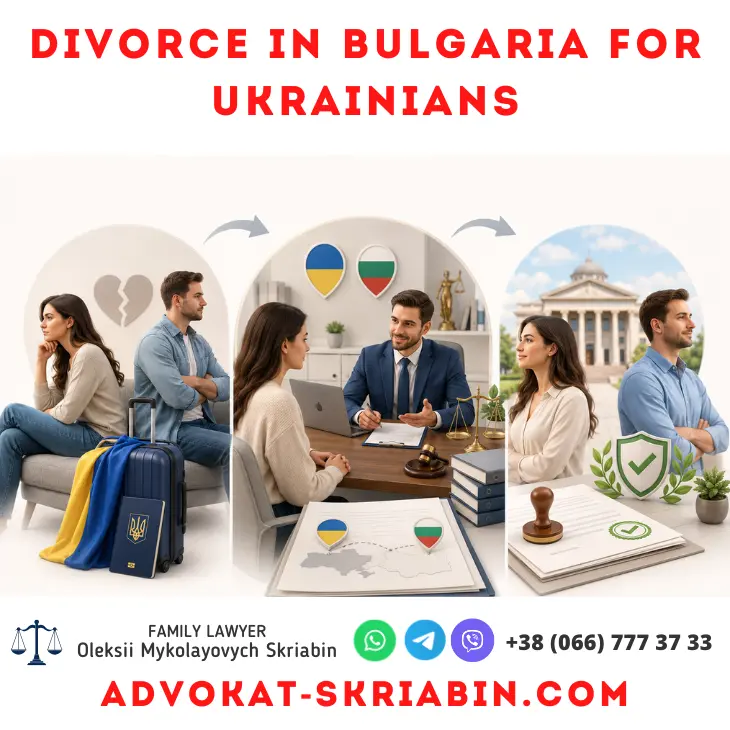
Can Ukrainians Get a Divorce in Bulgaria
Ukrainian citizens may legally obtain a divorce in Bulgaria if Bulgarian courts have jurisdiction over the case. In practice, this often applies when one or both spouses live in Bulgaria, have a registered address there, or maintain substantial connections with the country.
A divorce may be available even when the marriage was originally registered in Ukraine. The place where the marriage certificate was issued does not automatically determine where the divorce must take place. Jurisdiction depends on several legal factors, including residence and the circumstances of the family.
Many Ukrainians currently living abroad assume they must return to Ukraine to end a marriage. In reality, Bulgarian legal procedures may allow the divorce process to be handled locally, reducing travel and administrative difficulties. For similar cross-border situations, it is also useful to understand how Ukrainians can get divorced abroad when family circumstances are connected with several countries. The exact route depends on whether both spouses agree to divorce, whether children are involved, and whether there are disputes regarding property or support obligations.
Who Can File for Divorce in Bulgaria
The right to initiate a divorce generally belongs to either spouse. A joint application may also be submitted when both parties agree that the marriage should end. The most common situations involving a divorce of Ukrainian citizens in Bulgaria include spouses who both reside in Bulgaria, one spouse living in Bulgaria while the other remains in Ukraine, or spouses residing in different countries within Europe.
Courts usually examine whether they have authority to hear the case before proceeding. Therefore, determining jurisdiction is often one of the first legal questions that must be addressed. Even when one spouse refuses to participate, the other spouse may still have the right to begin divorce proceedings and request judicial termination of the marriage.
Divorce in Bulgaria for Ukrainians: What Law Applies
One of the most important issues in an international divorce Bulgaria case is determining which country’s law applies. The answer is not always straightforward because international family disputes may involve several legal systems at the same time.
In some situations, Bulgarian courts apply Bulgarian family law. In others, elements of Ukrainian law may become relevant, particularly when considering personal status issues, recognition procedures, or the legal effects of a foreign judgment.
The nationality of the spouses is only one factor. Courts may also evaluate habitual residence, the location of children, and other international jurisdiction rules. Because cross-border family disputes can become legally complex, many Ukrainians seek professional guidance before filing to avoid procedural errors that could delay recognition of the final divorce decision.
How to File for Divorce in Bulgaria Step by Step
The procedure for how to file for divorce in Bulgaria depends on whether the divorce is contested or uncontested. However, most cases follow a similar legal structure. The process normally begins with determining jurisdiction and preparing the required documents. After that, an application or claim is submitted to the competent Bulgarian court.
The court reviews the materials, schedules hearings if necessary, and evaluates whether legal requirements for divorce have been satisfied. Additional evidence may be requested in cases involving children, financial issues, or disputes between spouses.
Once the court issues its decision, the judgment may later be used for recognition procedures in another country when required. If the final document must be used in Ukraine or another state, the issue of recognition in Ukraine of a foreign court decision on divorce should be assessed in advance.
Step-by-Step Guide
- Determine whether Bulgarian courts have jurisdiction over your family matter.
- Collect marriage documents and any additional records relating to children or residence.
- Prepare the divorce application or court claim.
- Submit the documents to the appropriate Bulgarian court.
- Participate in hearings or provide additional information if requested.
- Obtain the final court decision.
- Complete recognition procedures if the divorce will be used in another country.
Can You Get Divorced in Bulgaria Without Returning to Ukraine
In many situations, yes. A divorce without returning to Ukraine may be possible when Bulgarian courts are competent to hear the case and procedural requirements can be satisfied locally. This option is especially important for Ukrainians who have established residence abroad and cannot easily travel back to Ukraine. International family law mechanisms often allow disputes to be resolved in the country where spouses currently live.
Whether personal attendance is required depends on the specific circumstances of the case. Some procedures may permit representation through legal counsel or the use of remote communication methods where permitted by law.
As a result, many Ukrainian citizens successfully complete divorce proceedings abroad without physically returning to Ukraine during the process. In comparable Ukrainian procedures, the option of divorce without presence is often important for people who live abroad or cannot personally attend each procedural step.
Online Divorce in Bulgaria for Ukrainians
Interest in an online divorce in Bulgaria has grown significantly among Ukrainians living abroad. Although every legal procedure contains formal requirements, parts of the process can often be organized remotely.
Document preparation, consultations, evidence collection, communication with legal representatives, and certain procedural actions may be handled online. This is particularly useful when spouses reside in different countries.
It is important to distinguish between a fully digital administrative service and a court-based legal process. Even when a divorce case involves court proceedings, many preparatory stages can be completed remotely. Where representation is available, legal assistance can substantially reduce the need for personal travel. If a lawyer represents the client, it is important to remember: A lawyer represents the client’s interests under a legal assistance agreement, which may be concluded online. A power of attorney is not required for this purpose.
Documents Required for Divorce in Bulgaria
The exact documents for divorce in Bulgaria depend on the type of divorce, the court involved, and whether children or financial disputes are part of the case. However, several documents are commonly required in most proceedings.
The marriage certificate is usually the primary document because it confirms the legal existence of the marriage. If the marriage was registered in Ukraine, a certified translation may be required depending on procedural rules and the court’s requirements.
When children are involved, additional documents relating to parenthood, residence, education, and financial support may become relevant. Courts generally seek sufficient information to determine whether the interests of the child are protected.
If one spouse resides in Ukraine while the other lives in Bulgaria, documents confirming residence status may also be requested. Proper document preparation often prevents delays and procedural complications. When Ukrainian civil status documents are missing or outdated, it may be necessary to obtain a marriage certificate before submitting materials for a foreign divorce or recognition procedure.
Divorce Through Court in Bulgaria: What to Expect
Most contested divorce cases in Bulgaria are resolved through court proceedings. The court examines whether the legal grounds for divorce have been established and whether all procedural requirements have been met.
A court-based divorce in Bulgaria may involve written submissions, evidence, hearings, and judicial review of family circumstances. The complexity of the case largely depends on whether the spouses agree on the divorce and related issues.
When disputes exist regarding children, alimony, property, or parental responsibilities, the court usually conducts a more detailed analysis before issuing a final decision. Although many people worry about lengthy litigation, careful preparation of documents and legal arguments often helps the process proceed more efficiently.
Divorce by Mutual Consent in Bulgaria
A divorce by mutual consent is generally considered the simplest form of family law dissolution. In this scenario, both spouses agree that the marriage should end and jointly ask the court to approve the divorce.
For many Ukrainians, this approach offers a more predictable and less stressful solution than contested proceedings. It may also reduce conflict and facilitate future cooperation regarding children and financial matters.
The court usually verifies that the agreement is genuine and that legal requirements have been satisfied. Particular attention may be given to arrangements concerning children, maintenance obligations, and parental rights.
Mutual consent procedures are often viewed as the most practical route when both spouses have already accepted that reconciliation is no longer possible. In Ukrainian practice, a similar legal logic applies to divorce by mutual consent, where agreement between spouses usually reduces procedural conflict.
Divorce Without a Spouse’s Consent in Bulgaria
Not every marriage ends by agreement. A spouse may refuse to cooperate, ignore communications, or actively oppose the divorce. Nevertheless, Bulgarian law generally provides mechanisms that allow a marriage to be dissolved even when one spouse objects.
A contested divorce in Bulgaria for Ukrainians typically requires the applicant to present facts demonstrating that the marital relationship has irretrievably broken down. The absence of consent does not automatically prevent a divorce. Courts focus on the actual circumstances of the marriage rather than solely on the position taken by one spouse.
In practice, many contested cases arise when spouses have lived separately for a significant period, maintain separate households, or no longer function as a family unit. If the second spouse is abroad or refuses to cooperate, the related topic of divorce without consent may help understand the general legal approach to ending a marriage despite objections.
Divorce in Bulgaria When Children Are Involved
When minor children are involved, the court’s primary concern is their welfare. Divorce proceedings become more complex because issues extending beyond the termination of the marriage must be addressed.
The court may evaluate parental responsibilities, living arrangements, communication with each parent, and financial support. The child’s interests generally take priority over disagreements between adults.
For Ukrainian families living abroad, additional international considerations may arise when parents reside in different countries. Jurisdictional issues sometimes affect decisions regarding residence and parental rights. Because cross-border family disputes can have long-term consequences, careful planning is particularly important when children are involved in a divorce of Ukrainian citizens in Bulgaria.
Property Division and Alimony After Divorce in Bulgaria
Ending a marriage often raises questions about property ownership, financial obligations, and future support. These matters may be resolved by agreement or, when disputes exist, through judicial determination.
Property acquired during marriage may require legal evaluation depending on the applicable family law rules. Ownership rights, contributions of each spouse, and the nature of the assets can all influence the outcome.
Alimony issues may also arise, particularly where one spouse has significantly lower income or where child support obligations must be established. If a child continues to need financial support after the marriage ends, the issue of alimony after divorce should be assessed separately from the formal termination of marriage.
Although some couples focus only on obtaining the divorce itself, addressing financial matters early often helps prevent additional legal disputes later. At this stage of the process, many Ukrainians seek assistance from a specialized online divorce service to coordinate documentation and legal strategy across different countries.
Is a Bulgarian Divorce Recognized in Ukraine
One of the most important questions for Ukrainians abroad concerns the recognition of divorce in Bulgaria in Ukraine. In many situations, a Bulgarian divorce decision can be recognized in Ukraine, allowing the former spouses to rely on the foreign judgment for legal purposes. Recognition procedures ensure that the divorce produces legal consequences within the Ukrainian legal system.
The specific procedure depends on the type of decision issued, the applicable international agreements, and Ukrainian procedural requirements. For official Ukrainian legal rules and procedural references, readers may consult the legislation database of the Verkhovna Rada of Ukraine. Recognition becomes especially important when a person intends to remarry, update civil status records, resolve inheritance matters, or complete other legal formalities in Ukraine.
Recognition of Ukrainian Divorce Decisions in Bulgaria
The reverse situation is also common. Many Ukrainians first obtain a divorce in Ukraine and later need that decision to be recognized in Bulgaria. Recognition procedures allow Bulgarian authorities and institutions to acknowledge the legal effect of a Ukrainian judgment. Without recognition, practical difficulties may arise regarding civil status records and administrative matters.
The precise requirements vary according to the legal basis relied upon and the circumstances of the particular case. Courts and administrative bodies generally review whether procedural standards have been satisfied.
Individuals planning long-term residence in Bulgaria often benefit from verifying recognition requirements before submitting documents to local authorities. If a Ukrainian court judgment must be used abroad, apostille legalization of a court decision on divorce may become one of the practical steps before presenting documents to foreign institutions.
Family Lawyer for Ukrainians in Bulgaria: When Legal Assistance Helps
International family law matters frequently involve more than one legal system, multiple authorities, language barriers, and cross-border procedural requirements. A divorce lawyer in Bulgaria for Ukrainians can assist with jurisdiction analysis, document preparation, court representation, recognition procedures, and communication with foreign institutions.
Professional legal support is particularly valuable when children are involved, when one spouse cannot be located, when property disputes exist, or when recognition in another country will be necessary. Where representation is required, remember: A lawyer represents the client’s interests under a legal assistance agreement, which may be concluded online. A power of attorney is not required for this purpose.
Phone / Viber / WhatsApp / Telegram: +380667773733
Email: skriabinadvokat@gmail.com