
- What Is the Procedure for Communicating with a Child Through the Guardianship Authority
- When Should You Apply to the Guardianship Authority About Child Contact
- Rights of Parents to Communicate With a Child After Divorce
- How to Establish a Child Communication Schedule Without Court
- Documents Required for Determining Communication With a Child
- How to Submit an Application to the Guardianship Authority
- What Does the Guardianship Authority Consider When Resolving a Child Contact Dispute
- Determining a Parent’s Participation in the Child’s Upbringing
- Communication Between a Father and Child Through the Guardianship Authority
- Communication Between a Mother and Child Through the Guardianship Authority
- What to Do if One Parent Prevents Communication With the Child
- Is the Decision of the Guardianship Authority Mandatory
- Establishing a Child Communication Schedule Through Court
- Enforcement of Decisions Regarding Communication With a Child
- Family Lawyer Assistance in Child Contact and Parenting Disputes
- Step-by-Step Guide
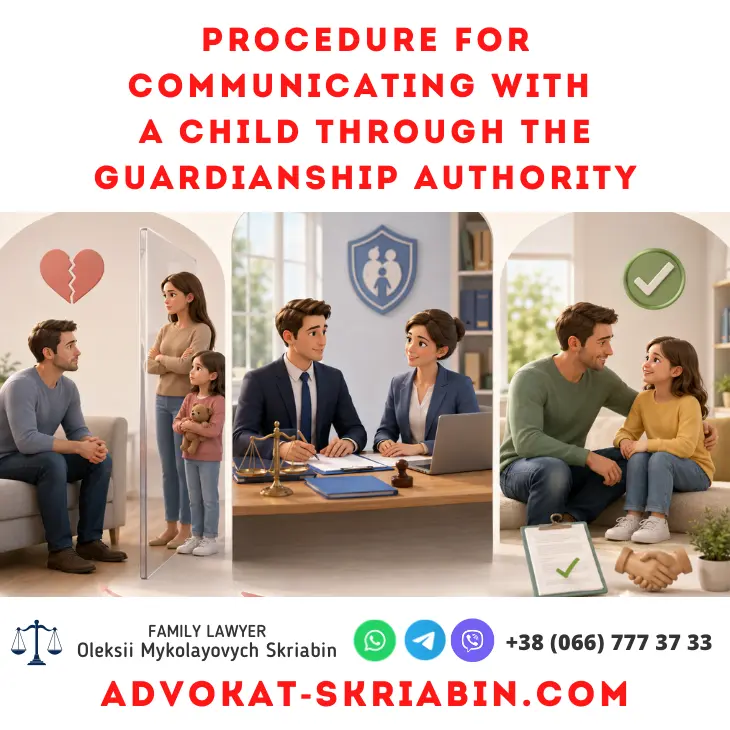

What Is the Procedure for Communicating with a Child Through the Guardianship Authority
The procedure for communicating with a child through the guardianship authority is an administrative mechanism that helps parents resolve disagreements regarding contact with a child without immediately going to court. The guardianship authority evaluates the circumstances of the family situation and determines how communication should take place in the best interests of the child.
In practice, this procedure is frequently used after divorce when parents cannot independently agree on a child communication schedule. The authority may define the frequency of meetings, participation in education, holidays, online communication, and other forms of interaction between the parent and child.
The main purpose of the procedure is not to create obstacles for either parent but to protect the child’s emotional well-being and ensure that parental rights are exercised responsibly. In many cases, parents also need practical legal guidance on how to arrange a stable child visitation schedule when communication becomes irregular or conflict-based.
When Should You Apply to the Guardianship Authority About Child Contact
An application to the guardianship authority is appropriate when parents cannot agree on communication arrangements. This often happens after separation, divorce, relocation, or when one parent begins restricting access to the child. Parents should not wait until the conflict becomes severe. Early intervention may help prevent a prolonged child contact dispute and reduce emotional stress for the child.
The guardianship authority can also be approached when verbal agreements no longer work, when schedules are constantly changed without consent, or when a parent wants official confirmation of the agreed communication procedure. For Ukrainians living abroad, this mechanism may also be useful when one parent remains in Ukraine and regular contact with the child requires formal regulation.
Rights of Parents to Communicate With a Child After Divorce
Divorce does not terminate parental rights and responsibilities. In most situations, both parents retain the right to maintain a relationship with their child regardless of which parent the child primarily lives with.
The principle of communication between a parent and child after divorce is based on the understanding that children generally benefit from maintaining stable relationships with both parents. Courts and guardianship authorities usually evaluate whether such communication serves the child’s best interests.
A parent who lives separately from the child typically has the right to participate in education, receive information about the child’s development, communicate directly, and take part in important decisions affecting the child’s life. General rules on family rights and parental responsibilities may be checked through official Ukrainian family legislation (https://zakon.rada.gov.ua), especially when parents need to understand the legal basis of their position. At the same time, these rights must be exercised in a manner that respects the child’s safety, health, education, and emotional stability.
How to Establish a Child Communication Schedule Without Court
Many family disputes can be resolved through negotiation and administrative procedures before litigation becomes necessary. Communication with a child without court is often faster, less stressful, and less expensive for the family.
Parents may voluntarily agree on:
- days and times of meetings;
- participation in holidays and vacations;
- online communication;
- attendance at school and extracurricular activities;
- transportation arrangements.
If no agreement can be reached, the guardianship authority may assist in creating a practical child visitation schedule after divorce that reflects the child’s age, school obligations, health condition, and existing family circumstances.
A properly established schedule often reduces future conflicts because expectations become clear for both parents. If the issue concerns not only meetings but also the child’s daily residence and living arrangements, parents may also need legal analysis of how child residence is determined in Ukraine.
Documents Required for Determining Communication With a Child
The process of determining communication with a child usually requires documentation that helps the authority understand the family situation. Depending on the circumstances, documents may include identification documents, proof of parentage, information about the child’s residence, evidence concerning education and health, and materials demonstrating each parent’s involvement in the child’s life.
The purpose of collecting documents is not to create unnecessary bureaucracy. Rather, the authority needs objective information to make a balanced assessment regarding future communication arrangements. When parents live in different countries, additional documents related to residence abroad or cross-border communication may also become relevant.
How to Submit an Application to the Guardianship Authority
The application process generally begins with a written request describing the circumstances of the dispute and the desired communication arrangements. The applicant should clearly explain why intervention is necessary, describe existing obstacles to communication, and propose a realistic schedule that serves the child’s interests. After receiving the application, the guardianship authority typically gathers information, reviews relevant documents, and may communicate with both parents before preparing its conclusions.
When preparing an application, it is helpful to focus on the child’s needs rather than personal conflicts between the parents. Authorities generally give greater weight to arguments demonstrating concern for the child’s development and emotional stability.
What Does the Guardianship Authority Consider When Resolving a Child Contact Dispute
When reviewing a child contact dispute, the guardianship authority examines multiple factors rather than relying on a single circumstance. The authority may evaluate the child’s age, emotional attachment to each parent, educational needs, health considerations, living conditions, and the ability of each parent to support the child’s development.
The authority also assesses whether proposed communication arrangements are practical and whether they contribute to maintaining healthy family relationships. Particular attention is usually paid to situations involving prolonged absence from the child’s life, relocation, international residence, or allegations that communication may negatively affect the child.
Determining a Parent’s Participation in the Child’s Upbringing
Parental participation in child upbringing extends beyond simple visitation. It includes active involvement in education, healthcare, personal development, and important life decisions. When determining participation, the guardianship authority may consider how a parent contributes to the child’s daily life and whether meaningful involvement can be maintained despite separate residence.
Modern communication methods also play an important role. Participation may include regular video calls, attendance at school events, involvement in educational planning, and cooperation with the other parent regarding the child’s welfare. The goal is to ensure that the child maintains a stable and supportive relationship with both parents whenever possible.
Communication Between a Father and Child Through the Guardianship Authority
Communication between a father and child is one of the most common categories of family disputes reviewed by the guardianship authority. In many cases, disagreements arise after divorce when the child lives primarily with the mother and the father wishes to establish a stable and predictable communication schedule.
The guardianship authority generally evaluates the father’s actual participation in the child’s life, the quality of the relationship, and the practical possibilities for maintaining regular contact. The goal is not to favor one parent but to ensure that the child benefits from meaningful involvement from both parents.
A father may request regular meetings, participation in educational activities, communication during holidays, online contact, and involvement in important decisions affecting the child. If the father resides abroad, the authority may also consider long-distance communication arrangements. The authority’s assessment focuses on the child’s interests rather than personal disagreements between the parents.
Communication Between a Mother and Child Through the Guardianship Authority
Although children often reside with their mothers after separation, situations also arise where a mother seeks formal regulation of communication with a child. This may occur when the child resides with the father or another guardian, or when parental conflict creates obstacles to regular contact.
The guardianship authority reviews the mother’s relationship with the child, her level of involvement in upbringing, and any circumstances affecting communication. As with all family matters, the primary consideration remains the child’s welfare.
A mother has the right to seek protection of her parental rights and to request a clear communication schedule when informal arrangements are ineffective. When determining communication arrangements, the authority seeks to preserve family bonds while minimizing stress and instability for the child.
What to Do if One Parent Prevents Communication With the Child
Preventing communication between a parent and child can have serious legal consequences. If one parent systematically interferes with contact, the affected parent may seek assistance from the guardianship authority and, if necessary, from the court.
The first step is usually to document the obstacles being created. Evidence may include correspondence, refusals to allow meetings, repeated violations of agreements, or other proof demonstrating interference with communication.
The guardianship authority can review the circumstances and issue conclusions regarding appropriate contact arrangements. In many cases, formal involvement by the authority encourages compliance and helps reduce conflict. Where the problem continues, legal assistance with removing obstacles to communication with the child may be necessary to protect parental rights. If administrative measures do not resolve the issue, judicial protection may become necessary to safeguard parental rights and the child’s interests.
Is the Decision of the Guardianship Authority Mandatory
A guardianship authority decision on child communication carries significant legal weight and is often relied upon in family disputes. However, its legal effect depends on the specific circumstances and the subsequent actions of the parties involved.
In practice, such decisions frequently serve as an important reference point for parents and may influence future court proceedings. They demonstrate that an independent authority has reviewed the family situation and evaluated the child’s interests.
Nevertheless, if either parent disagrees with the decision or if the conflict continues, the matter may ultimately be resolved by a court. For this reason, it is important to participate actively in the guardianship authority process and provide complete and accurate information.
Establishing a Child Communication Schedule Through Court
Court proceedings become necessary when administrative procedures fail to resolve the dispute or when one parent refuses to comply with established arrangements. A court may formally determine a child communication schedule, define parental rights and responsibilities, and establish mechanisms for future interaction. Judicial decisions provide stronger legal protection and can be enforced through legal procedures. The court evaluates evidence presented by both parties, considers the conclusions of the guardianship authority, and determines what arrangement best serves the child.
For international families, court proceedings may involve additional issues related to jurisdiction, residence abroad, and cross-border enforcement. When a parent cannot personally attend hearings, online participation of a lawyer in family cases may help organize representation and procedural communication remotely. It is important to remember that litigation should not be viewed solely as a conflict between parents. The court’s primary concern is the child’s welfare and long-term development.
Enforcement of Decisions Regarding Communication With a Child
Obtaining a decision is only one part of the process. Effective enforcement is often necessary when a parent refuses to comply with established communication arrangements. If violations continue, the affected parent may seek legal remedies designed to ensure compliance. Repeated obstruction may be considered by courts when reviewing future parenting arrangements.
Enforcement mechanisms exist to protect both parental rights and the child’s right to maintain meaningful relationships with family members. Successful enforcement frequently depends on careful documentation of violations and timely legal action. If a parent later needs to confirm the content of a judicial act or continue enforcement procedures, it may be important to know how to obtain a court decision in Ukraine for further legal use.
Family Lawyer Assistance in Child Contact and Parenting Disputes
Family disputes involving children are emotionally challenging and legally complex. Professional legal assistance can help parents understand their rights, prepare documentation, communicate effectively with authorities, and avoid procedural mistakes.
A family lawyer may assist with applications to the guardianship authority, preparation of evidence, negotiations between parents, and court proceedings when necessary. Before starting the process, a parent may benefit from an individual family lawyer consultation to assess documents, risks, and the most suitable legal strategy.
Where representation is required, the following rule applies: A lawyer represents the client’s interests on the basis of a legal assistance agreement, which may be concluded online. A power of attorney is not required for this purpose.
The Online Divorce Service also provides assistance in family matters related to communication with children, parental rights, and dispute resolution, helping clients protect their interests while prioritizing the well-being of the child.
Step-by-Step Guide
- Assess the existing communication problem and determine whether direct negotiation with the other parent remains possible.
- Collect documents and information confirming your relationship with the child and your participation in the child’s upbringing.
- Prepare a written proposal describing the desired child communication schedule.
- Submit an application to the guardianship authority and provide all relevant information.
- Participate in the review process and cooperate with requests for additional information.
- Review the conclusions or decision prepared by the guardianship authority.
- If the dispute remains unresolved, seek judicial protection and request that the court establish communication arrangements.
Phone / Viber / WhatsApp / Telegram: +380667773733
Email: skriabinadvokat@gmail.com