- What Is the Divorce Procedure in Ukraine
- How to File for Divorce in Ukraine
- Divorce Through the Registry Office in Ukraine
- How to Apply for Divorce Through Court
- Documents Required for Filing for Divorce
- Divorce With Children: What You Need to Know
- Can You File for Divorce Online in Ukraine
- Divorce Through the Electronic Court System
- Divorce Without the Other Spouse’s Consent
- How Long Does a Divorce Take in Ukraine
- How Much Does Divorce Cost in Ukraine
- Divorce While Living Abroad: Available Options
- Divorce During Martial Law in Ukraine
- Can You Get Divorced Without Personal Attendance
- Legal Assistance for Divorce Proceedings in Ukraine
- Step-by-Step Instruction
What Is the Divorce Procedure in Ukraine
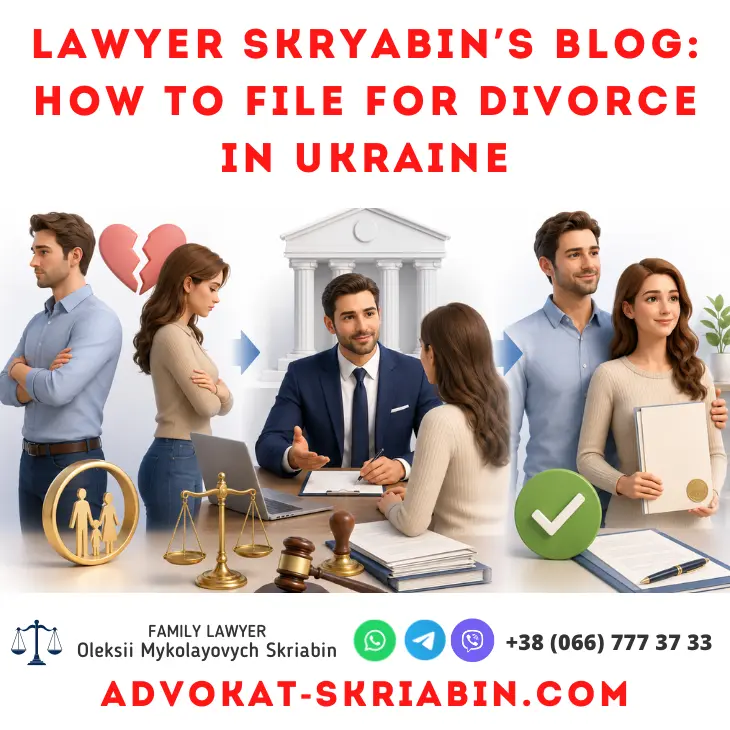
The divorce procedure in Ukraine depends primarily on the family circumstances of the spouses. The law distinguishes between administrative divorce through the registry office and judicial divorce through the court system.
When both spouses agree to terminate the marriage and there are no minor children, divorce through registry office Ukraine is usually the simplest option. The spouses submit a joint application and complete the procedure through the civil registration authority.
In situations involving minor children, disagreement regarding divorce, inability to locate one spouse, or other legal complications, divorce through court Ukraine is generally required. The court evaluates the circumstances and issues a legally binding decision terminating the marriage. The choice of procedure affects the documents required, the timeline, the costs involved, and the possibility of handling the matter remotely.
How to File for Divorce in Ukraine
When people ask how to file for divorce in Ukraine, the answer depends on several key factors. The first step is determining whether the case falls under registry office jurisdiction or court jurisdiction.
If spouses have no minor children and both agree to divorce, they may usually submit a joint application through the registry office. If there are children or disagreement between spouses, the matter normally proceeds through court.
Applicants should gather identification documents, marriage registration records, and any additional documents relevant to their specific circumstances. Proper preparation significantly reduces the risk of procedural complications. For Ukrainians living abroad, the process may often be organized remotely through legal representatives, electronic services, and international document exchange procedures.
Divorce Through the Registry Office in Ukraine
The Electronic Court System has become an important tool for parties involved in divorce through court Ukraine. It allows participants to submit documents electronically, receive court notifications, and monitor the status of proceedings. Information about court procedures can also be verified through the official Judicial Authority portal.
Electronic communication reduces paperwork and simplifies interaction with the court. For many applicants, especially those living outside Ukraine, this system provides a practical way to stay informed without frequent travel. Many Ukrainians also use remote divorce through the Electronic Court to handle family law matters from abroad.
Using electronic tools does not change the legal standards applicable to divorce proceedings. Courts continue to review evidence, evaluate submissions, and issue decisions according to Ukrainian law. Applicants should ensure that all electronic submissions are complete and accurate because procedural mistakes may still cause delays or require additional clarification.
How to Apply for Divorce Through Court
Divorce through court Ukraine is required in many family situations. Court proceedings become necessary when spouses have minor children, when one spouse opposes the divorce, or when additional family law issues require judicial review.
The process normally begins with filing a statement of claim to the competent court. The court reviews submitted documents, opens proceedings, and notifies the parties about the case. Judges typically examine whether continuation of the marriage is possible and whether legal requirements for divorce have been satisfied. The court focuses on the actual family situation rather than solely on formal objections from one spouse.
When representation is required, it is important to remember the following rule:A lawyer represents the client’s interests on the basis of a legal assistance agreement, which can be concluded online. A power of attorney is not required for this.
Documents Required for Filing for Divorce
The exact documents for divorce in Ukraine vary depending on the chosen procedure and individual circumstances. Nevertheless, several documents are commonly required in most cases.
Typical documentation may include:
- Identification documents of the spouses.
- Marriage certificate or relevant registration records.
- Information concerning children, if applicable.
- Court-related documents when judicial proceedings are required.
- Additional evidence relevant to specific family circumstances.
Applicants living abroad may also need legalized, apostilled, or officially translated documents depending on the country where they currently reside. Incomplete documentation is one of the most common reasons for delays. Careful preparation before filing significantly improves efficiency and helps avoid requests for additional materials.
Divorce With Children: What You Need to Know
Divorce with children in Ukraine involves additional legal considerations because the rights and interests of the child receive special protection. The court may examine issues related to residence arrangements, parental participation in upbringing, communication schedules, and financial support obligations. Although divorce and child-related disputes may sometimes be considered separately, they frequently arise together.
Parents often believe that divorce automatically determines all issues concerning children. In practice, additional agreements or court decisions may be necessary to regulate important aspects of the child’s life after separation.
Constructive communication between parents can significantly reduce stress for children and simplify legal proceedings. Courts generally encourage solutions that prioritize the child’s welfare and stability.
Can You File for Divorce Online in Ukraine
Many people are interested in whether they can file for divorce online Ukraine without personally visiting multiple institutions. Modern digital services have made many procedural steps more accessible.
Depending on the circumstances, documents may be prepared electronically, consultations may be conducted remotely, and court communication may occur through electronic systems. This approach is especially useful for Ukrainians living abroad or individuals with limited ability to attend proceedings in person.
Online services do not eliminate legal requirements, but they can simplify document preparation, communication, and procedural management. For many families, remote legal support has become a practical solution that reduces travel, saves time, and improves access to professional assistance.
Another advantage of remote divorce services is the ability to coordinate the process even when spouses live in different countries. Many procedural actions can be completed without physical meetings, making the process more convenient and predictable.
However, the availability of online procedures depends on the specific circumstances of the case. Cases involving children, disputes over parental rights, or complex property issues may still require additional court involvement and legal analysis.
Divorce Through the Electronic Court System
The Electronic Court System has become an important tool for parties involved in divorce through court Ukraine. It allows participants to submit documents electronically, receive court notifications, and monitor the status of proceedings.
Electronic communication reduces paperwork and simplifies interaction with the court. For many applicants, especially those living outside Ukraine, this system provides a practical way to stay informed without frequent travel.
Using electronic tools does not change the legal standards applicable to divorce proceedings. Courts continue to review evidence, evaluate submissions, and issue decisions according to Ukrainian law. Applicants should ensure that all electronic submissions are complete and accurate because procedural mistakes may still cause delays or require additional clarification.
Divorce Without the Other Spouse’s Consent
Divorce without spouse consent Ukraine is one of the most common concerns raised by individuals whose marriage has effectively ended but whose spouse refuses to cooperate. Ukrainian law generally does not allow one spouse to indefinitely prevent the termination of a marriage if family relations have actually broken down. When reconciliation is impossible and the marriage no longer exists in practice, the court may grant the divorce despite objections. Similar principles apply in cases involving divorce without consent.
The court considers the overall circumstances of the relationship rather than focusing exclusively on the refusal of one spouse to agree. Evidence demonstrating separation, lack of family life, or irreparable breakdown of the relationship may be relevant. Many people mistakenly believe they are trapped in a marriage if their spouse refuses to sign documents. In reality, judicial procedures exist specifically to address such situations.
How Long Does a Divorce Take in Ukraine
The duration of the divorce procedure in Ukraine depends on several factors, including the chosen procedure, the complexity of the case, court workload, and the behavior of the parties. Registry office divorces are generally completed faster because they involve fewer procedural stages. Court proceedings may require additional time for hearings, document review, and judicial decision-making. The practical aspects are explained in detail in divorce timeframes in Ukraine.
Cases involving children, international elements, disputes regarding residence, or procedural objections may require more extensive examination. Although many people seek an exact timeline, every case is unique. Proper preparation of documents and compliance with procedural requirements often help reduce unnecessary delays.
How Much Does Divorce Cost in Ukraine
The cost of divorce depends on the selected procedure and the specific circumstances involved. Expenses may include state fees, court fees, document preparation costs, translation services, and legal assistance.
Court proceedings generally involve more expenses than administrative divorce through the registry office because they require judicial review and additional procedural actions. Individuals often review information about the cost of divorce before starting the process.
For Ukrainians residing abroad, additional expenses may arise from document legalization, apostille procedures, international delivery services, or certified translations. Before beginning the process, it is advisable to obtain an individual assessment of expected costs based on the specific facts of the case.
Divorce While Living Abroad: Available Options
Divorce for Ukrainians abroad is increasingly common due to migration, employment opportunities, and international family circumstances. Living outside Ukraine does not automatically prevent a Ukrainian citizen from filing for divorce. Depending on the circumstances, the case may be handled through Ukrainian courts, foreign authorities, or procedures involving recognition of foreign decisions.
Many expatriates prefer remote solutions because returning to Ukraine solely for divorce proceedings may be inconvenient or expensive. Electronic communication, legal representation, and digital document exchange often make remote participation possible. Special procedures exist for divorce abroad and cross-border family law matters. Careful analysis of jurisdiction, applicable law, and document requirements is particularly important when the spouses reside in different countries.
Divorce During Martial Law in Ukraine
Martial law has created additional practical challenges for many families. Relocation, military service, temporary displacement, and international migration have complicated numerous family law matters.
Despite these challenges, divorce procedures continue to operate. Registry offices, courts, and electronic services remain available, although procedural timelines and practical logistics may vary depending on circumstances. Additional information can be found regarding divorce during martial law.
Can You Get Divorced Without Personal Attendance
In many situations, it is possible to complete significant portions of the divorce process without personal attendance. This option is particularly relevant for Ukrainians living abroad, military personnel, individuals with health limitations, and people residing far from the competent court.
Remote participation may be available through electronic systems, legal representation, and digital communication channels. The extent of remote involvement depends on the specific facts of the case and procedural requirements.
When legal representation is used, the following principle applies: A lawyer represents the client’s interests on the basis of a legal assistance agreement, which can be concluded online. A power of attorney is not required for this. The possibility of minimizing personal attendance often makes the divorce process significantly more convenient and less stressful.
Legal Assistance for Divorce Proceedings in Ukraine
Although some divorces are relatively straightforward, many cases involve children, international elements, disagreements between spouses, or procedural complexities. Professional legal assistance helps identify the appropriate procedure, prepare documents correctly, avoid procedural errors, and respond effectively to unexpected issues.
For individuals living abroad, legal support is often especially valuable because it reduces the need for personal travel and facilitates communication with Ukrainian institutions. A reliable online divorce service can assist with document preparation, procedural coordination, and legal guidance throughout the process while helping clients understand their rights and obligations.
Step-by-Step Instruction
- Determine which divorce procedure applies to your situation: registry office or court.
- Collect all documents for divorce in Ukraine that may be required for your case.
- Prepare and submit the appropriate application or court claim.
- Provide any additional documents requested by the registry office or court.
- Participate in the procedure personally, remotely, or through legal representation where permitted.
- Receive the official document confirming termination of the marriage.
- Update any records or documents that may require changes after the divorce.
Phone / Viber / WhatsApp / Telegram: +380667773733
Email: skriabinadvokat@gmail.com