- Determining the Origin of a Child Whose Parents Are Not Married
- What Is Determining the Origin of a Child Under Ukrainian Law
- How Is the Origin of a Child Established When Parents Are Not Married
- Determining the Origin of a Child From the Mother
- Determining the Origin of a Child From the Father Without Marriage
- Voluntary Acknowledgment of Paternity by Joint Parental Application
- How to Register a Child if the Parents Are Not Married
- What Documents Are Required to Establish Paternity
- Can Paternity Be Established Through Court Proceedings
- DNA Testing in Paternity and Parentage Cases
- Establishing Paternity After the Child’s Birth
- What Happens if the Father Refuses to Recognize the Child
- Establishing the Origin of a Child From a Deceased Father
- Rights of a Child Born Outside Marriage
- Legal Assistance in Establishing Paternity and Child Origin
- Step-by-Step Guide
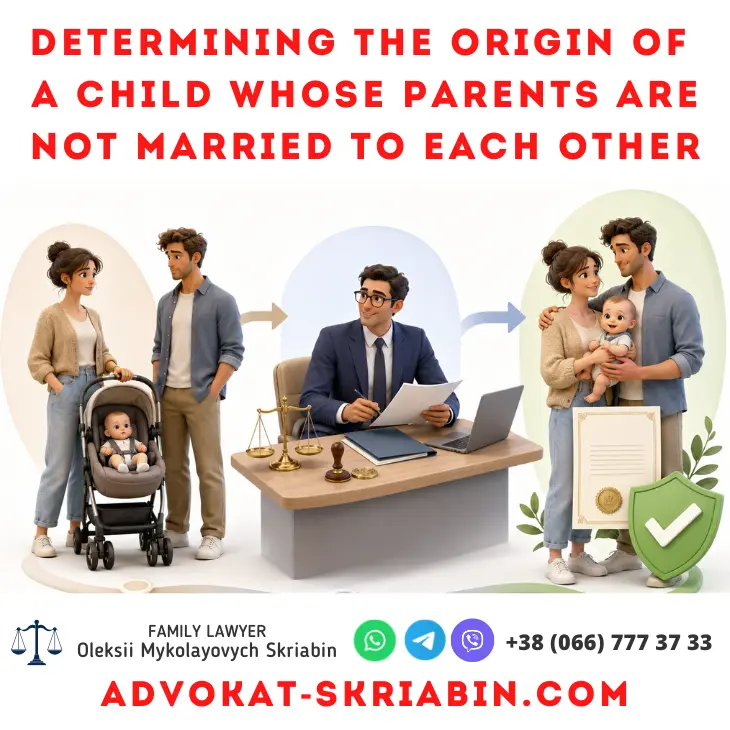

Determining the Origin of a Child Whose Parents Are Not Married
Determining the origin of a child whose parents are not married is one of the most important family law procedures in Ukraine. The legal establishment of parentage affects a child’s rights to support, inheritance, citizenship matters, social guarantees, and legal protection from both parents.
For many families, especially when the parents are not officially married, questions arise regarding establishing paternity, registration of a child without marriage, obtaining documents, and protecting parental rights. These issues may become even more complicated when one parent lives abroad, refuses to cooperate, or disputes biological parentage.
The Online Divorce Service regularly assists Ukrainian citizens in resolving family law matters remotely, including issues connected with acknowledgment of paternity and judicial parentage proceedings. Understanding the legal framework helps parents avoid mistakes and protect the best interests of the child.
What Is Determining the Origin of a Child Under Ukrainian Law
Determining the origin of a child is a legal procedure through which the state officially recognizes who the child’s mother and father are. This process creates legal rights and obligations between parents and the child.
Under Ukrainian family law, the origin of a child may be established differently depending on whether the parents are married. When a child is born within a registered marriage, the law generally presumes parentage. However, determining the origin of a child whose parents are not married requires additional legal actions under the provisions of the Family Code of Ukraine.
The purpose of the procedure is not merely administrative. Legal parentage influences child support obligations, inheritance rights, parental authority, citizenship matters, and access to various legal protections.
How Is the Origin of a Child Established When Parents Are Not Married
When parents are not legally married, Ukrainian law provides several mechanisms for determining the origin of a child. The specific procedure depends on the circumstances of the family and the willingness of the parents to cooperate.
In many situations, the simplest option is voluntary acknowledgment of paternity. The mother and father jointly submit an application to the civil registration authority, and the father’s information is entered into the child’s birth record. If the father is ready to recognize the child voluntarily, the procedure of legal acknowledgment of fatherhood may help avoid a court dispute.
If agreement is impossible, establishing paternity through court may become necessary. Courts evaluate evidence and determine whether a legal parent-child relationship exists. For Ukrainians residing abroad, the process may also be completed through consular institutions or by using properly legalized and translated documents.
Determining the Origin of a Child From the Mother
The origin of a child from the mother is generally confirmed through medical documentation relating to childbirth. Information about the mother is entered into the official birth registration records. In most cases, no separate legal dispute arises concerning maternity because childbirth itself serves as the basis for recognition. However, unusual situations involving surrogacy, disputes over maternity, or missing documentation may require additional legal procedures.
The registration authority relies on official evidence confirming that the woman gave birth to the child. Once recorded, the mother’s legal status becomes fully recognized under Ukrainian law. This recognition creates rights and responsibilities regarding care, upbringing, representation, and financial support of the child.
Determining the Origin of a Child From the Father Without Marriage
Determining the origin of a child from the father may be more complicated when the parents are not married. Unlike maternity, paternity is not automatically presumed outside marriage. A father who wishes to be legally recognized can voluntarily acknowledge paternity. This procedure allows his information to be entered into official records without litigation.
Problems often arise when the alleged father refuses participation or disputes biological parentage. In such circumstances, judicial proceedings may become necessary. The legal recognition of the origin of a child from the father provides important protections for the child, including support rights, inheritance rights, and the ability to maintain a legally recognized family relationship.
Voluntary Acknowledgment of Paternity by Joint Parental Application
Voluntary acknowledgment of paternity is one of the most straightforward methods of establishing legal parentage. It avoids lengthy disputes and allows both parents to participate in the registration process. The mother and father submit a joint application confirming that the man recognizes himself as the child’s father. After verification, the information is entered into official records.
This procedure is commonly used when the parents maintain cooperative relations despite not being married. It reduces procedural complexity and provides legal certainty for the child. Voluntary acknowledgment of paternity is often the preferred solution because it minimizes emotional stress and legal expenses while protecting the child’s interests.
How to Register a Child if the Parents Are Not Married
The registration of a child without marriage follows a specific legal procedure. The child’s birth must be officially recorded, and information about both parents must be entered according to the available legal grounds.
If the father participates in the process and agrees to recognition, the registration authority can record his information based on a joint parental application. This is usually the fastest and least complicated approach.
When no acknowledgment of paternity exists, the registration authority may enter information according to the legal procedure applicable in such situations. However, this does not always create full legal recognition of fatherhood.
Parents living abroad should pay particular attention to document legalization, translation requirements, and the role of Ukrainian consular institutions in civil registration matters. In practical situations, parents may also need help to receive a Ukrainian birth certificate or obtain repeated civil status documents for use in Ukraine or abroad.
What Documents Are Required to Establish Paternity
The exact set of documents depends on whether paternity is established voluntarily or through court proceedings. Nevertheless, certain documents are commonly required.
Typical documentation may include:
- Identification documents of the parents;
- Child’s birth certificate or registration records;
- Joint application regarding acknowledgment of paternity;
- Evidence supporting biological parentage;
- Court documents if litigation is involved.
Additional documents may be necessary when one parent resides abroad, is deceased, or when foreign documents must be recognized in Ukraine. Careful preparation of documentation often helps avoid delays and procedural difficulties.
Can Paternity Be Established Through Court Proceedings
Establishing paternity through court is possible when voluntary recognition cannot be achieved. Court proceedings are commonly initiated when the alleged father refuses acknowledgment of paternity, disputes biological parentage, cannot be located, or has died before completing the necessary registration procedures.
The court examines all available evidence and determines whether sufficient grounds exist to legally recognize the parental relationship. Evidence may include witness statements, correspondence, photographs, financial support records, medical information, and expert examinations.
For many families, judicial proceedings become the only practical way to protect the rights of a child born outside marriage and secure legal recognition of parentage. In such cases, professional support with court recognition of paternity can help prepare evidence and choose the correct procedural approach.
DNA Testing in Paternity and Parentage Cases
DNA testing is often one of the most persuasive forms of evidence in parentage disputes. Modern genetic analysis can provide highly reliable information concerning biological relationships. Courts frequently rely on DNA examinations when other evidence is disputed or insufficient. Although DNA testing is not required in every case, it may significantly strengthen a party’s position.
Refusal to participate in genetic testing may also be considered by the court when evaluating the circumstances of the dispute. Because every case is unique, legal advice is often beneficial before requesting, arranging, or challenging DNA evidence in court.
Establishing Paternity After the Child’s Birth
Many parents believe paternity must be established immediately after birth. In reality, establishing paternity after the child’s birth remains possible through the procedures provided by law. A father may later submit documents recognizing the child, provided the legal requirements are satisfied. If cooperation between the parents is unavailable, judicial proceedings remain an option.
Delayed recognition frequently occurs when parents separate, live in different countries, or only later decide to formalize their legal relationship with the child. Regardless of timing, establishing legal parentage provides important protections for both the child and the parent.
What Happens if the Father Refuses to Recognize the Child
A father’s refusal to voluntarily recognize a child does not automatically prevent legal parentage from being established. The mother, guardian, caregiver, or other authorized person may seek judicial recognition of paternity. The court then evaluates evidence and determines whether a legal parent-child relationship exists.
Successful court recognition may create significant legal consequences, including child support obligations, inheritance rights, and parental responsibilities. For this reason, individuals facing such disputes should carefully collect evidence and seek professional legal guidance before initiating proceedings. When the father contests the relationship or there is an active conflict, assistance in a paternity dispute before court may be important for building a legally consistent position.
Establishing the Origin of a Child From a Deceased Father
Cases involving a deceased father are often emotionally difficult and legally complex. Nevertheless, Ukrainian law provides mechanisms for establishing the origin of a child from a deceased father.
The court may examine documents, witness testimony, correspondence, photographs, family records, financial evidence, and other materials demonstrating the relationship between the deceased person and the child.
In certain circumstances, genetic evidence involving relatives of the deceased may also become relevant. Successful recognition can be particularly important when inheritance rights, social benefits, or legal family status depend upon the establishment of parentage.
Rights of a Child Born Outside Marriage
A child born outside marriage enjoys the same fundamental rights as a child born to married parents. Ukrainian law protects children regardless of the marital status of their mother and father. Legal recognition of parentage allows the child to exercise important rights connected with family relationships, maintenance, inheritance, education, healthcare, and social protection.
The purpose of establishing paternity is not simply administrative. It helps ensure that the child receives the legal safeguards and support that accompany an officially recognized parent-child relationship. If parentage affects financial support, parents may also need to understand the legal procedure for collecting child support after paternity has been established. Courts and public authorities generally prioritize the best interests of the child when resolving parentage disputes.
Legal Assistance in Establishing Paternity and Child Origin
Parentage matters may appear straightforward at first glance, but practical difficulties often arise. Missing documents, international elements, disputes between parents, and evidentiary issues can significantly complicate the process.
Professional legal assistance may help prepare applications, collect evidence, represent interests before courts and authorities, and reduce procedural risks. For Ukrainian citizens living abroad, legal support can be especially valuable when dealing with foreign documents, translations, legalization requirements, and remote representation.
Important: A lawyer represents the client’s interests on the basis of a legal assistance agreement, which may be concluded online. A power of attorney is not required for this purpose. When the situation involves several family law issues at once, a consultation with a family law attorney can help determine whether the matter should be resolved through civil registration, court proceedings, or additional document preparation.
Step-by-Step Guide
- Determine whether the father is willing to voluntarily acknowledge paternity.
- Collect all available documents concerning the child, parents, and birth registration.
- Submit a joint application if voluntary acknowledgment of paternity is possible.
- If agreement cannot be reached, prepare evidence supporting the biological relationship.
- File the necessary application or claim with the competent authority or court.
- Participate in proceedings and provide additional evidence if requested.
- Obtain the final registration or court decision confirming legal parentage.
Phone / Viber / WhatsApp / Telegram: +380667773733
Email: skriabinadvokat@gmail.com