
- What Is the Child’s Patronymic and How Is It Determined
- How Is a Child’s Patronymic Assigned at Birth
- Who Determines the Child’s Patronymic Under Ukrainian Law
- Determining the Child’s Patronymic During Birth Registration
- How Is the Child’s Patronymic Formed From the Father’s Name
- Determining the Child’s Patronymic if Parents Are Not Married
- What Patronymic Does a Child Receive if the Father Is Unknown
- Determining the Child’s Patronymic After Establishing Paternity
- Child’s Patronymic if the Father Is a Foreigner
- Can Parents Choose a Different Patronymic for a Child
- How to Change a Child’s Patronymic Through Civil Registry Authorities
- Changing a Child’s Patronymic After Adoption
- Changing a Child’s Patronymic Through Court Proceedings
- Documents Required to Change a Child’s Patronymic
- Legal Assistance in Matters Related to a Child’s Patronymic
- Step-by-Step Guide
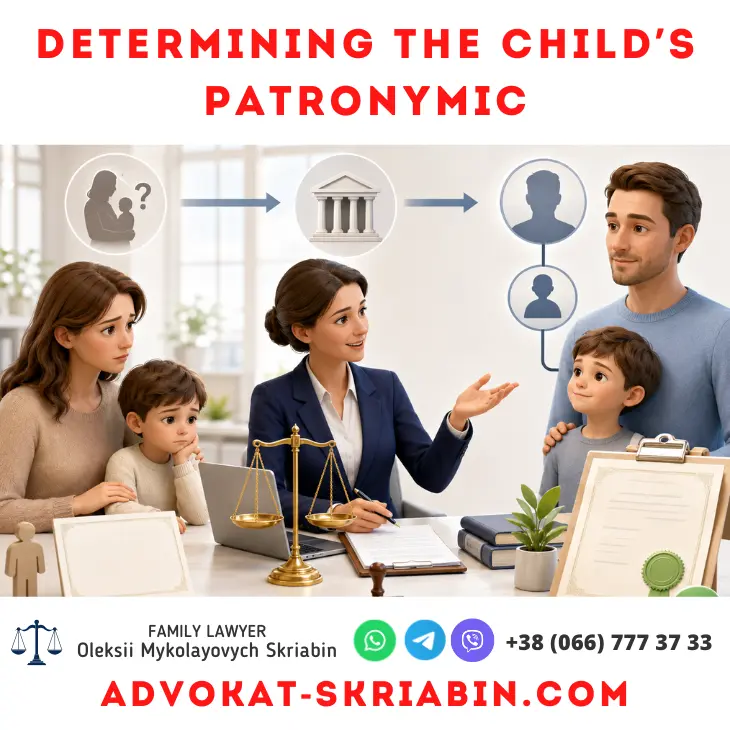

What Is the Child’s Patronymic and How Is It Determined
The child’s patronymic is an important component of a person’s full legal name in Ukraine. It is traditionally formed from the father’s given name and becomes part of the child’s official identity documents. Because of this, determining the child’s patronymic is not merely a formality but a legal procedure that affects civil registration records and future documents.
Many parents ask how is the child’s patronymic determined under Ukrainian law. In most cases, the answer depends on the legal status of the parents, whether paternity has been established, and what information is entered into the birth record. The rules are generally straightforward, but complications may arise when parents are not married, the father is unknown, or foreign legal elements are involved.
The child’s patronymic in Ukraine is regulated through civil registration procedures. Registry authorities record the patronymic at the time of birth registration based on the information available regarding the child’s father. Once entered into official records, any future modification usually requires a separate legal procedure. Understanding these rules from the beginning helps avoid errors that may later require corrections through administrative or judicial proceedings.
How Is a Child’s Patronymic Assigned at Birth
Assigning a patronymic to a child usually takes place simultaneously with birth registration. When parents register a newborn, registry authorities collect information about the child’s name, surname, date of birth, parents, and patronymic.
Determining a newborn child’s patronymic depends primarily on the father’s recorded first name. If the father is legally recognized and included in the birth registration documents, the patronymic is formed according to Ukrainian linguistic rules and entered into the official birth record.
In practice, parents rarely face difficulties when both parents are married and their information is properly documented. However, additional legal steps may be required when paternity has not yet been established or when foreign documents are involved. For families residing abroad, birth registration through Ukrainian consular institutions may also involve determining a newborn child’s patronymic according to Ukrainian legal requirements.
Who Determines the Child’s Patronymic Under Ukrainian Law
Many parents mistakenly believe they may freely select any patronymic they prefer. In reality, Ukrainian legislation establishes specific principles governing assigning a patronymic to a child. The primary authority responsible for determining the child’s patronymic is the civil registry authority that records the birth. Registry officials rely on legal documents, parental information, and paternity records when making the relevant entry.
Parents play an important role because they provide the information used during registration. Nevertheless, the final recording must comply with Ukrainian legal requirements and established naming conventions.
Where disputes arise regarding paternity or parental rights, courts may become involved. Judicial decisions can subsequently affect the child’s legal identity and require changes to the recorded patronymic.
Determining the Child’s Patronymic During Birth Registration
Patronymic during birth registration is usually established when the birth certificate is issued. This stage is particularly important because information entered into the registry becomes the basis for future passports, educational records, and other legal documents.
When both parents are legally recognized, registry officials record the father’s details and automatically determine the corresponding patronymic. The process is generally completed without additional legal action.
If discrepancies exist between documents, if paternity has not been confirmed, or if foreign-issued records require recognition in Ukraine, the registration process may take longer. In such cases, parents should carefully verify all submitted information before final registration. Mistakes in patronymic during birth registration can create practical difficulties later, especially when applying for identity documents, inheritance matters, or international legal procedures.
How Is the Child’s Patronymic Formed From the Father’s Name
In Ukraine, the child’s patronymic is generally derived from the father’s first name according to established grammatical and linguistic rules. The exact form depends on the father’s given name and the child’s gender. For example, different endings are traditionally used for boys and girls. Registry authorities apply standardized rules to ensure consistency across official records and databases.
Although the process may appear purely linguistic, it has legal significance because the resulting patronymic becomes part of the child’s official identity. Therefore, any errors in the father’s name may directly affect the patronymic assigned to the child. Parents should carefully review all documents before registration to ensure that the father’s personal information is correctly recorded and matches other official records.
Determining the Child’s Patronymic if Parents Are Not Married
Child’s patronymic if parents are not married is one of the most common issues encountered in family law practice. The absence of a registered marriage does not automatically prevent the child from receiving a patronymic derived from the father’s name.
The decisive factor is whether paternity has been legally established. If both parents jointly acknowledge paternity and complete the necessary registration procedures, the child may receive a patronymic based on the father’s name just as in cases involving married parents. In related situations, parents may also need to understand how determining the origin of a child whose parents are not married affects the birth record and future civil status documents.
Difficulties arise when the father does not acknowledge paternity or when there is disagreement between the parents. In such situations, additional legal procedures may be required before determining the child’s patronymic. For Ukrainian citizens living abroad, similar principles apply, although the required documentation may differ depending on the country where the child was born.
What Patronymic Does a Child Receive if the Father Is Unknown
When the father is unknown or no legally recognized information about the father exists, special legal rules apply. Registry authorities cannot simply assign a patronymic based on assumptions or unofficial information.
Depending on the circumstances, the birth record may contain information entered according to procedures established by law. In these situations, the patronymic is determined based on the information legally recorded during registration.
Parents should understand that entries made in these circumstances may later be modified if paternity is subsequently established. Therefore, the initial patronymic may not necessarily remain unchanged throughout the child’s life. This issue frequently arises when a mother registers a birth independently or when the biological father cannot be legally identified at the time of registration.
Determining the Child’s Patronymic After Establishing Paternity
Child’s patronymic after establishing paternity often changes because the legal basis for the child’s identity has changed. Once paternity is officially recognized, the father’s information becomes part of the child’s civil status record.
Determining the child’s patronymic after establishing paternity may require amendments to the birth record. Following such amendments, a new birth certificate may be issued reflecting the updated information.
The procedure may occur voluntarily through civil registration authorities or as a result of a court decision establishing paternity. Each case depends on the specific circumstances and available evidence.
Where legal disputes arise, professional assistance may help ensure that the process is completed correctly and without unnecessary delays, especially when the case also involves establishing paternity or correcting information in the child’s official records.
Child’s Patronymic if the Father Is a Foreigner
A child’s patronymic if the father is a foreigner is generally determined according to Ukrainian legal rules when Ukrainian registration authorities are involved. The foreign citizenship of the father does not automatically eliminate the use of a patronymic.
However, practical difficulties sometimes arise when foreign naming systems differ significantly from Ukrainian traditions. Certain countries do not use patronymics at all, which may create inconsistencies between Ukrainian and foreign documents. In international families, it is important to coordinate documentation carefully to avoid future issues involving passports, residence permits, educational records, and cross-border legal recognition.
Where foreign documents require translation or legalization, parents should ensure that the father’s name is accurately reflected because even minor discrepancies may affect the resulting patronymic.
Can Parents Choose a Different Patronymic for a Child
Many parents wonder whether they can independently select a patronymic that differs from the father’s name. In most situations, Ukrainian law follows the traditional principle that the patronymic is derived from the father’s given name. Therefore, parents generally cannot arbitrarily invent or assign a completely unrelated patronymic.
Nevertheless, certain exceptional situations may arise. These usually involve specific family-law procedures, court decisions, adoption cases, or situations where legal records concerning the father change after the child’s birth.
Before attempting to register a non-standard patronymic, parents should carefully verify whether such an option is legally available in their circumstances. Incorrect registration attempts may result in delays or refusal by civil registry authorities. Because a patronymic forms part of a person’s legal identity, any deviation from standard rules must have a clear legal basis supported by appropriate documentation.
How to Change a Child’s Patronymic Through Civil Registry Authorities
Changing a child’s patronymic is often possible through civil registry authorities when legal grounds exist for making amendments to the birth record. The exact procedure depends on the reason for the requested change.
Common situations include correcting registration errors, updating records after establishing paternity, changes resulting from adoption, or other legally significant family-law events. Registry authorities examine the submitted documents before deciding whether the requested modification may be recorded administratively. When the issue concerns updated civil status information, parents may also need to obtain a certificate of name change or another document confirming the change.
In straightforward cases, administrative procedures are generally faster and less expensive than court proceedings. However, registry authorities may refuse the request if supporting documents are insufficient or if a legal dispute exists. Parents should prepare all necessary evidence in advance to avoid delays and additional requests for documentation.
Changing a Child’s Patronymic After Adoption
Adoption creates a new legal relationship between the child and the adoptive parent. As a result, changing a child’s patronymic after adoption is often one of the legal consequences of the adoption process.
Following the completion of adoption proceedings, civil status records may be amended to reflect the new parental relationship. Depending on the circumstances, the child’s surname, patronymic, and other identifying information may also be updated.
The purpose of these changes is to ensure consistency between the child’s legal identity and the newly established family relationship. Such amendments are usually reflected in updated registration documents.
Families considering adoption should understand the potential implications for the child’s personal records before the procedure is finalized, including how adoption of a child may affect the child’s surname, patronymic, birth record, and future documents.
Changing a Child’s Patronymic Through Court Proceedings
Court involvement becomes necessary when administrative procedures are unavailable or when a legal dispute prevents the registry authority from making the requested changes. Changing a child’s patronymic through court proceedings may occur in disputes concerning paternity, parental rights, adoption-related conflicts, or disagreements between parents regarding the child’s legal identity.
The court evaluates the evidence presented by the parties and determines whether changing a child’s patronymic serves the child’s interests and complies with applicable law. Judicial proceedings may also address related issues involving parental status and civil registration records. In disputed family-law matters, the court may also assess claims connected with contesting paternity when the child’s legal origin and identity records are challenged.
Where representation before a court is required, it is important to remember that an attorney represents the client’s interests under a legal assistance agreement, which may be concluded online. A separate power of attorney is not required for this purpose.
Documents Required to Change a Child’s Patronymic
The documents required to change a child’s patronymic vary depending on the legal grounds for the request. However, authorities typically require documents confirming the child’s identity and the basis for the proposed modification.
The following documents are commonly relevant:
- Birth certificate of the child.
- Identification documents of the parent or legal representative.
- Documents confirming paternity, adoption, or another legal ground for the requested change.
- Court decisions, where applicable.
- Additional supporting documents requested by the registry authority.
Before submitting an application, parents should verify current requirements with the relevant authority because specific circumstances may require additional documentation. Proper preparation significantly increases the likelihood of a successful and timely outcome.
Legal Assistance in Matters Related to a Child’s Patronymic
Issues involving determining the child’s patronymic often appear simple at first glance but can become legally complex when paternity disputes, international elements, adoption procedures, or court proceedings are involved.
Professional legal assistance may help parents understand available options, prepare documentation, communicate with registration authorities, and resolve disputes efficiently. This is particularly important for Ukrainians living abroad who may face additional challenges involving foreign documents and cross-border procedures.
A family-law professional can analyze the circumstances of the case, explain available legal mechanisms, and help avoid mistakes that could later require lengthy corrections. In complex situations, a family lawyer consultation can help determine whether the issue may be resolved through the registry authority or requires court proceedings.
If the issue arises together with divorce, parental rights, or child-related disputes, assistance from a specialized online divorce service may simplify the overall process and reduce administrative burdens.
Step-by-Step Guide
Step-by-Step Guide for Determining or Changing a Child’s Patronymic
- Identify the legal basis for determining the child’s patronymic. Determine whether the issue concerns birth registration, establishing paternity, adoption, correction of records, or another family-law matter.
- Collect supporting documents. Prepare birth certificates, parental identification documents, paternity records, court decisions, or adoption documents if applicable.
- Verify the information entered in official records. Carefully review names, surnames, and personal details before submitting documents to avoid future corrections.
- Contact the appropriate civil registry authority. Administrative procedures are often sufficient when no dispute exists and all documentation is available.
- Resolve paternity issues if necessary. When the father is not legally recognized, paternity may need to be established before the patronymic can be changed.
- Apply for amendments to the civil status record. Submit the required application together with supporting evidence and await review by the competent authority.
- Seek legal assistance if a dispute arises. Court proceedings may be necessary when administrative solutions are unavailable or contested.
Phone / Viber / WhatsApp / Telegram: +380667773733
Email: skriabinadvokat@gmail.com