- What Is the Divorce Procedure in Ukraine
- Divorce Through DRACS: When Is Court Not Required
- Divorce Through Court in Ukraine: Step-by-Step Process
- What Documents Are Required for Divorce in Ukraine
- Divorce With Children: Important Legal Considerations
- Can You Get a Divorce Online in Ukraine
- Divorce Without Personal Attendance or Court Visits
- How Long Does a Divorce Take in Ukraine
- How Much Does Divorce Cost in Ukraine?
- Divorce Without the Consent of a Husband or Wife
- Divorce When One Spouse Lives Abroad
- Divorce Between a Ukrainian Citizen and a Foreigner
- Divorce During Martial Law in Ukraine
- Court Decision on Divorce and Legal Effect
- Lawyer for Divorce in Ukraine: When Professional Help Is Needed
- Practical Step-by-Step Guide to Divorce in Ukraine
What Is the Divorce Procedure in Ukraine
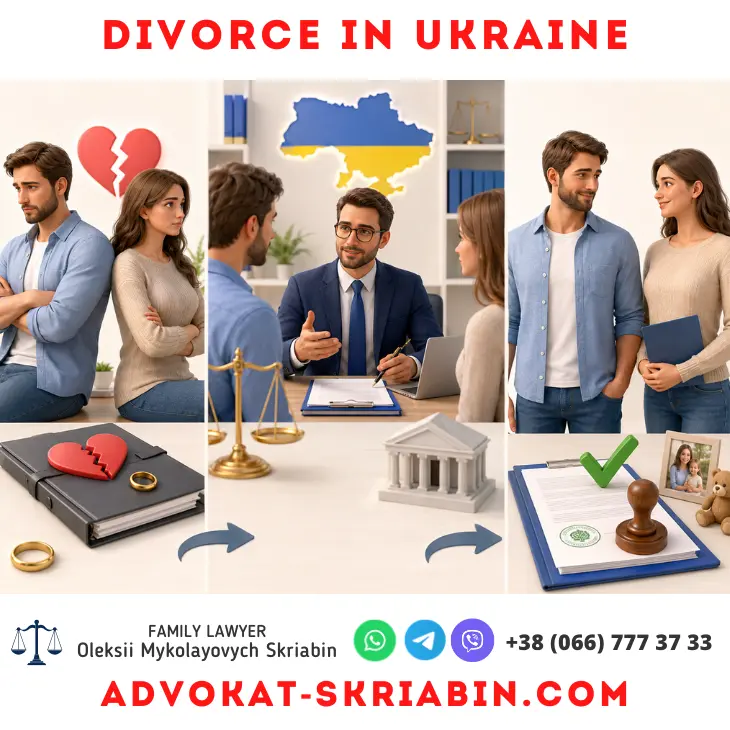
Divorce in Ukraine can be completed either through the civil registry office (DRACS) or through the court, depending on the circumstances of the spouses. The applicable procedure is determined by factors such as the presence of minor children, mutual consent, the location of the spouses, and whether one of them is a foreign citizen.
If both spouses agree to terminate the marriage and there are no common minor children, the procedure may be completed through DRACS. In more complex situations, including children, disagreement between the spouses, or international elements, divorce through the court usually becomes necessary.
Ukrainian family legislation allows both residents and citizens living abroad to initiate divorce proceedings. In many situations, the process can be organized remotely through a lawyer, minimizing the need for personal attendance. Understanding which procedure applies to your situation is the first step toward a successful and legally valid divorce.
Divorce Through DRACS: When Is Court Not Required
Divorce through DRACS is the simplest and fastest way to terminate a marriage in Ukraine. This procedure is generally available when both spouses agree to divorce and do not have common minor children.
The spouses submit a joint application to the relevant DRACS office. After the statutory waiting period, the marriage is officially dissolved and recorded in the state register. In cases where the administrative procedure is available, divorce through the civil registry office may be more convenient than court proceedings.
Advantages of divorce through DRACS include:
- Simpler procedure compared to court proceedings.
- Shorter processing time.
- Lower administrative costs.
- No court hearings.
However, DRACS cannot resolve disputes regarding children, property, alimony, or other family law issues. If such disputes exist, a court procedure is usually required. In some exceptional cases provided by law, a marriage may also be dissolved through DRACS without the participation of the other spouse, for example when that spouse has been declared missing or legally incapacitated by a court decision.
Divorce Through Court in Ukraine: Step-by-Step Process
Court divorce is required when the spouses have common minor children, when one spouse does not consent to the divorce, or when circumstances make administrative dissolution through DRACS impossible.
The general court procedure includes the following steps:
- Legal Assessment of the Situation. Before filing a claim, it is important to determine jurisdiction, identify necessary documents, and evaluate any issues involving children, property, or international aspects.
- Preparation of the Divorce Claim. A statement of claim is prepared in accordance with procedural requirements and submitted to the competent Ukrainian court.
- Filing Documents With the Court. The claimant files the required documents and pays the court fee. The court reviews the submission and opens proceedings if all requirements are satisfied. For court-related issues such as jurisdiction, access to courts, and procedural information, the official portal of the Judiciary of Ukraine may also be useful.
- Court Consideration.The court examines the circumstances of the marriage and determines whether continuation of the marital relationship is possible. In some cases, the court may grant a reconciliation period.
- Court Decision. If the court concludes that preservation of the family is impossible, it issues a decision dissolving the marriage.
- Legal Effect of the Divorce.After the court decision becomes legally effective, the marriage is officially terminated under Ukrainian law. Depending on the circumstances, court proceedings may be completed with personal attendance, through legal representation, or remotely when permitted by procedural rules.
What Documents Are Required for Divorce in Ukraine
The documents required for divorce in Ukraine depend on the chosen procedure and the specific circumstances of the spouses. In most cases, the following documents may be necessary:
- Marriage certificate.
- Passports or identification documents of the spouses.
- Tax identification numbers, if applicable.
- Birth certificates of common children.
- Proof of residence or registration.
- Court fee payment confirmation for court proceedings.
- Power of attorney if a lawyer represents a party.
- Foreign documents with translation, legalization, or apostille when required.
Additional documents may be necessary if one spouse resides abroad, is a foreign citizen, or if there are related disputes concerning children, property, or maintenance obligations. A separate review of divorce documents helps understand which papers are usually needed before filing. Proper preparation of documents helps avoid delays and reduces the risk of the court leaving the claim without movement or requesting additional evidence.
Divorce With Children: Important Legal Considerations
When spouses have common minor children, divorce is usually completed through the court. Ukrainian law prioritizes the protection of children’s interests during family disputes.
The court may consider matters related to:
- The child’s place of residence.
- Participation of each parent in upbringing.
- Child support obligations.
- Communication and visitation arrangements.
- International relocation issues.
Although divorce proceedings focus primarily on dissolving the marriage, disputes concerning children often require additional agreements or separate court proceedings. If minor children are involved, divorce with children should be assessed carefully because the procedure usually differs from a simple administrative divorce. Parents are encouraged to cooperate and reach mutually acceptable arrangements whenever possible, as this often shortens the process and reduces emotional stress for children.
Can You Get a Divorce Online in Ukraine
In many situations, an online divorce in Ukraine is possible with professional legal assistance. Modern technologies and electronic communication allow significant parts of the divorce process to be completed remotely. Depending on the circumstances, a lawyer may assist with:
- Preparation of documents.
- Remote consultations.
- Electronic submission of court documents.
- Communication with government authorities.
- Representation before the court.
Online divorce is particularly useful for Ukrainians living abroad, military personnel, internally displaced persons, and individuals who cannot personally attend court proceedings. In suitable cases, online divorce in Ukraine allows the client to reduce travel, simplify communication, and organize the process remotely. The possibility of a fully remote procedure depends on the facts of the case, available documentation, and court requirements.
Divorce Without Personal Attendance or Court Visits
Many clients are interested in obtaining a divorce without personally attending court hearings. In appropriate cases, legal representation allows much of the process to be completed without the direct participation of the spouse. A lawyer can prepare documents, submit applications, monitor procedural deadlines, and represent the client’s interests.
This option is especially relevant when:
- A spouse lives abroad.
- Travel to Ukraine is difficult.
- The client has work or military obligations.
- Health conditions limit personal attendance.
- The parties wish to minimize personal contact.
While some cases may still require limited participation, professional legal assistance often significantly reduces the need for personal involvement. For clients who cannot appear personally, divorce without presence may be a practical legal option depending on the circumstances.
How Long Does a Divorce Take in Ukraine
The duration of divorce proceedings depends on the procedure selected and the complexity of the case. Divorce through DRACS is generally the fastest option because it follows an administrative process and does not require court hearings. Court divorce proceedings usually take longer because the court must review documents, schedule hearings, and comply with procedural requirements.
Factors that may affect timing include:
- Presence of children.
- Objections from the other spouse.
- International elements.
- Need for translation of documents.
- Court workload.
- Requests for reconciliation periods.
- Additional family law disputes.
A straightforward uncontested case is generally resolved faster than a dispute involving multiple legal issues.
How Much Does Divorce Cost in Ukraine?
The cost of divorce in Ukraine varies depending on the chosen procedure and the complexity of the matter.
Potential expenses may include:
- Administrative fees.
- Court fees.
- Legal representation.
- Translation services.
- Notarial services.
- Apostille and legalization of documents.
- International document delivery.
Cases involving foreign citizens, property disputes, international family matters, or complex procedural issues generally require additional legal work and may increase overall costs. Before starting the process, it is useful to estimate the possible cost of divorce based on the selected procedure and the amount of legal work required. Before initiating proceedings, it is advisable to obtain an individual assessment based on the specific circumstances of the case.
Divorce Without the Consent of a Husband or Wife
A spouse cannot permanently prevent divorce simply by refusing to consent. If one spouse wishes to terminate the marriage and reconciliation is no longer possible, Ukrainian law generally allows the court to dissolve the marriage despite objections from the other party.
In such situations, the court evaluates:
- The actual family relationship.
- Whether the marriage has effectively broken down.
- The interests of both spouses.
- The interests of any children involved.
Although the absence of consent may affect procedural aspects and timing, it does not automatically prevent a divorce from being granted. The court’s primary task is to determine whether preservation of the family remains realistic under the circumstances.
Divorce When One Spouse Lives Abroad
Divorce remains possible even when one spouse permanently resides outside Ukraine. Such situations are increasingly common due to international relocation, employment, study, or family circumstances.
When one spouse lives abroad, several legal issues may arise:
- Determining the proper court jurisdiction.
- Serving court documents internationally.
- Preparing translated documents.
- Confirming the foreign address of the spouse.
- Complying with international legal procedures.
In many cases, a Ukrainian citizen living abroad can initiate divorce proceedings in Ukraine through a lawyer without returning to the country. Each international divorce requires an individual legal assessment because the applicable procedure depends on citizenship, residence, available documents, and the specific facts of the case.
Divorce Between a Ukrainian Citizen and a Foreigner
A marriage between a Ukrainian citizen and a foreign citizen may be dissolved in Ukraine if legal requirements are satisfied.
International divorce cases often involve additional considerations, including:
- Foreign passports and identification documents.
- Translation and notarization requirements.
- International jurisdiction issues.
- Recognition of the divorce abroad.
- Service of court documents in another country.
A properly completed Ukrainian divorce may later need to be recognized in another country depending on local legislation. When one of the spouses is a foreign citizen, divorce with a foreigner requires special attention to documents, jurisdiction, and further use of the divorce decision abroad. Because international family law matters can be complex, legal assistance is often important to avoid procedural mistakes and future recognition problems.
Divorce During Martial Law in Ukraine
Martial law has affected many aspects of daily life, but divorce procedures in Ukraine continue to function.
Spouses may still:
- Apply for divorce through the available legal procedures.
- Submit court documents.
- Use electronic communication tools where permitted.
- Authorize lawyers to represent their interests.
- Resolve family law matters despite temporary restrictions.
However, martial law may influence procedural timelines, access to institutions, availability of documents, and practical aspects of participation in legal proceedings. Military service members, displaced persons, and Ukrainians living abroad often require customized legal solutions adapted to their circumstances. Professional legal support can help navigate these challenges while ensuring compliance with current legislation.
Court Decision on Divorce and Legal Effect
A court decision is the final legal document confirming the dissolution of a marriage through judicial proceedings.
Once the decision becomes legally effective:
- The marriage is officially terminated.
- The former spouses acquire the legal status of unmarried persons.
- The decision may be used to update personal records.
- Additional procedures such as apostille or legalization may be completed when the document is intended for use abroad.
It is important to understand that the marriage is not considered terminated merely because a hearing has taken place. The legal consequences arise after the court decision enters into force according to procedural rules. Individuals planning to remarry, change documents, or use the decision internationally should ensure that the judgment has become legally effective and obtain certified copies when necessary.
Lawyer for Divorce in Ukraine: When Professional Help Is Needed
Although some divorces are relatively straightforward, many situations benefit from professional legal assistance.
A divorce lawyer in Ukraine may assist with:
- Legal analysis of the situation.
- Preparation of documents.
- Court representation.
- Online divorce procedures.
- International family law matters.
- Divorce involving children.
- Divorce without the consent of a spouse.
- Recognition of foreign court decisions.
- Enforcement of related family law rights.
Professional representation often helps reduce delays, avoid procedural mistakes, and protect the client’s interests throughout the process. For Ukrainians living abroad, foreign citizens, military personnel, and individuals facing complex family circumstances, legal support can be particularly valuable.
Practical Step-by-Step Guide to Divorce in Ukraine
- Determine the Appropriate Procedure. Identify whether your situation qualifies for divorce through DRACS or requires court proceedings.
- Collect Necessary Documents. Prepare marriage certificates, identification documents, children’s documents, and any additional evidence required for your case.
- Obtain Legal Advice.A preliminary legal review can help identify potential obstacles and determine the most efficient strategy.
- Prepare and Submit Documents. File the required application or statement of claim with the appropriate authority.
- Monitor the Proceedings. Respond promptly to requests from the court or government authorities and comply with procedural deadlines.
- Obtain the Final Divorce Document. Receive confirmation of divorce through DRACS registration or a legally effective court decision.
- Complete Additional Formalities.If necessary, obtain certified copies, translations, apostilles, or legalization for international use.
Phone / Viber / WhatsApp / Telegram: +380667773733
Email: skriabinadvokat@gmail.com