- What Is Obstruction in Communication with the Child
- Can a Parent Legally Prevent Communication with the Child
- What to Do If You Are Not Allowed to See Your Child
- Parental Rights to Communication and Participation in Child Upbringing
- How to Establish a Child Visitation Schedule by Agreement
- How to Establish the Order of Communication with the Child Through Court
- Claim for Removal of Obstacles in Communication with the Child
- Evidence of Obstruction in Communication with the Child
- The Role of Child Welfare Authorities in Family Disputes
- Enforcement of a Court Decision on Child Visitation
- Liability for Preventing Communication with the Child
- Communication with the Child After Divorce: Practical Tips for Parents
- Communication with the Child When Parents Live Separately
- How a Family Lawyer Can Help Protect Your Rights
- Step-by-Step Guide
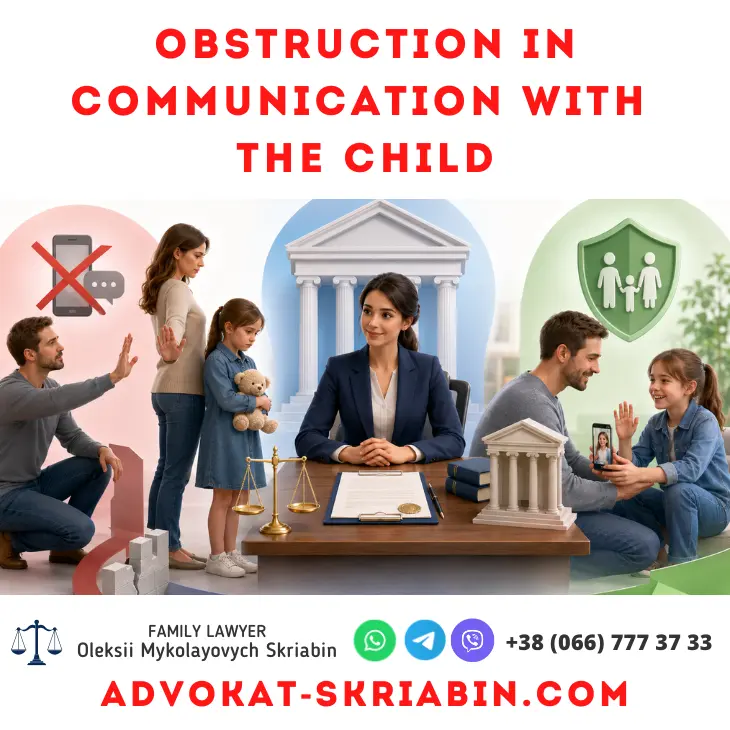

What Is Obstruction in Communication with the Child
Obstruction in communication with the child occurs when one parent intentionally interferes with the other parent’s ability to maintain contact, participate in the child’s life, or exercise legally protected parental rights. Such interference may be direct or indirect.
Direct obstruction often includes refusing visits, preventing phone calls, withholding information about the child’s location, or denying participation in important events. Indirect obstruction may involve manipulating the child, creating hostility toward the other parent, or repeatedly changing arrangements to make communication impossible.
The issue is not limited to physical meetings. Modern communication may include video calls, messaging applications, school activities, medical decisions, and other forms of participation in child upbringing. When a parent systematically prevents such involvement, the situation may qualify as removing obstacles in communicating with the child through legal procedures.
Courts generally examine the overall circumstances rather than isolated incidents. A single disagreement may not be sufficient, but a consistent pattern of interference often becomes significant evidence in family disputes.
Can a Parent Legally Prevent Communication with the Child
In most situations, a parent cannot arbitrarily prohibit communication between the child and the other parent. Child visitation rights and parental rights after divorce remain protected even when parents no longer live together.
However, there are exceptional situations where restrictions may be justified. If communication poses a genuine threat to the child’s physical safety, emotional health, or development, limitations may be considered by competent authorities or courts.
A parent cannot simply claim that communication is undesirable because of personal conflict, resentment after divorce, or disagreement about parenting styles. Family disputes between adults do not automatically eliminate the child’s right to maintain relationships with both parents.
When disagreements arise, courts focus on the best interests of the child. They assess living conditions, emotional bonds, the child’s age, parental behavior, and other relevant circumstances before determining whether any restrictions are appropriate under Ukrainian family legislation.
What to Do If You Are Not Allowed to See Your Child
Many parents search online using phrases such as “not allowed to see my child” because they feel helpless and do not know where to begin. The first step is to remain calm and avoid actions that could escalate the conflict.
It is important to document all incidents. Save messages, emails, screenshots, call records, and any evidence showing attempts to communicate with the child. Such documentation may later support a claim regarding obstruction in communication with the child.
Where possible, try to resolve the matter through dialogue. Written communication is often preferable because it creates a record demonstrating your willingness to cooperate and maintain a healthy relationship with the child.
If communication efforts fail, legal remedies may become necessary. Depending on the circumstances, parents may seek assistance from child welfare authorities or apply to court for protection of their child visitation rights.
Parental Rights to Communication and Participation in Child Upbringing
Parental rights extend beyond financial support and include meaningful involvement in a child’s life. Communication, emotional support, education, healthcare decisions, and participation in child upbringing are all important aspects of parenthood.
Even when parents live separately, both generally retain the right to receive information about the child’s development, education, and health. One parent should not be excluded from significant decisions solely because the marriage has ended.
Participation in child upbringing may include attending school meetings, discussing educational choices, supporting extracurricular activities, and maintaining regular communication. Courts frequently emphasize that active involvement benefits the child’s development and emotional stability. The child’s interests remain the primary consideration. Therefore, parental rights after divorce are balanced against the child’s needs rather than the personal preferences of either parent.
How to Establish a Child Visitation Schedule by Agreement
An agreed child visitation schedule is often the most effective solution because it reduces conflict and provides predictability for both parents and the child. Parents may agree on regular visits, holidays, vacations, video calls, transportation arrangements, and other practical details. Clear agreements help prevent misunderstandings and reduce opportunities for future disputes.
The schedule should be realistic and adapted to the child’s age, school obligations, health needs, and daily routine. Excessively rigid arrangements may become difficult to follow and create additional tension.
Written agreements are generally preferable because they clearly record each parent’s expectations. A properly drafted child visitation schedule can often prevent future litigation and support long-term cooperation between parents.
How to Establish the Order of Communication with the Child Through Court
When voluntary arrangements fail, a parent may ask the court to establish a legally binding child visitation schedule. The court examines evidence and determines an arrangement that serves the child’s best interests.
The court may define the frequency of visits, holiday periods, communication methods, overnight stays, and other practical details. Each case is assessed individually because family circumstances vary significantly.
Judges consider factors such as the child’s relationship with each parent, living conditions, work schedules, educational needs, and previous involvement in the child’s life. The objective is to create a balanced framework that promotes stability. A court order for child visitation provides legal certainty and creates enforceable obligations. Once issued, both parents are expected to comply with the established arrangements.
Claim for Removal of Obstacles in Communication with the Child
A claim for removal of obstacles in communication with the child is commonly used when one parent systematically interferes with contact despite repeated attempts to resolve the matter peacefully.
Such claims usually describe the existing difficulties, explain how communication has been restricted, and request specific measures to restore contact. The court may simultaneously determine the procedure for future communication.
Successful cases often depend on the quality of evidence rather than emotional allegations. Courts prefer objective documentation showing a pattern of obstruction rather than general complaints about family conflict. Where appropriate, the claim may also seek recognition of a parent’s right to participate in child upbringing and request specific mechanisms that facilitate ongoing communication.
Evidence of Obstruction in Communication with the Child
Evidence plays a central role in disputes involving removal of obstacles in communication with the child. Courts rely on verifiable facts rather than assumptions. Useful evidence may include written correspondence, messages refusing meetings, witness statements, school records, travel information, recordings permitted by law, and official reports from competent authorities.
Parents should organize evidence chronologically. A clear timeline often helps demonstrate repeated interference and makes it easier for the court to understand the history of the dispute. At the same time, evidence should be obtained legally. Unlawful collection methods can undermine a case and create additional legal problems for the parent seeking protection.
The Role of Child Welfare Authorities in Family Disputes
Child welfare authorities often play an important role when parents cannot independently resolve disputes regarding communication with a child. Their involvement may occur before court proceedings or during an ongoing case.
These authorities typically assess living conditions, parental involvement, and circumstances affecting the child. Their conclusions do not automatically determine the outcome of a dispute, but courts frequently consider them when making decisions regarding child visitation rights and participation in child upbringing.
Parents should cooperate respectfully with child welfare authorities and provide accurate information. Attempts to manipulate the process or conceal relevant facts may negatively affect credibility during legal proceedings.
In many situations, communication with a child through the guardianship authority helps parents focus on the child’s interests rather than their personal conflict. This approach can sometimes lead to voluntary agreements and reduce the need for prolonged litigation.
Enforcement of a Court Decision on Child Visitation
Obtaining a court order for child visitation is often only one stage of protecting parental rights. Difficulties may continue if the parent responsible for caring for the child refuses to comply with the court’s decision.
Enforcement of child visitation order procedures exist to ensure that judicial decisions are respected. When a parent repeatedly ignores an established visitation schedule, legal enforcement mechanisms may be initiated through the appropriate authorities.
Courts expect both parents to act in good faith. Deliberately avoiding compliance with a legally binding decision may lead to additional legal consequences and strengthen the position of the parent seeking enforcement. Parents should continue documenting incidents even after receiving a favorable judgment. Evidence of non-compliance may become important if additional enforcement measures are required.
Liability for Preventing Communication with the Child
Preventing communication with the child can have legal consequences. The exact outcome depends on the circumstances, the severity of the interference, and whether previous court decisions have been ignored.
Courts generally view repeated obstruction seriously because it may undermine the child’s relationship with a parent and interfere with parental rights after divorce. Persistent violations can influence future judicial decisions concerning parental responsibilities.
Liability is not imposed merely because parents disagree. Legal consequences usually arise when one parent intentionally creates obstacles despite established rights or judicial determinations. The primary purpose of legal intervention is not punishment but restoration of healthy communication and protection of the child’s interests. Nevertheless, parents should understand that systematic obstruction may eventually lead to significant legal consequences.
Communication with the Child After Divorce: Practical Tips for Parents
Communication with the child after divorce often requires patience, flexibility, and emotional maturity. Even when relationships between adults become difficult, children should not be placed in the middle of parental conflicts. Parents should avoid criticizing each other in the child’s presence. Negative comments may create emotional pressure and increase loyalty conflicts, making communication more difficult.
Consistency is also important. Regular calls, visits, participation in school activities, and genuine interest in the child’s daily life help maintain strong emotional connections over time. When disagreements arise, focus on practical solutions rather than assigning blame. Parents who demonstrate cooperation are often more successful in preserving stable and meaningful relationships with their children.
Communication with the Child When Parents Live Separately
Modern families frequently face situations where parents live in different cities or countries. Physical distance does not eliminate parental rights or the importance of maintaining communication. Technology has expanded opportunities for regular contact. Video calls, messaging applications, online educational activities, and virtual participation in important events can help maintain meaningful relationships.
When parents live separately, it is especially important to establish predictable communication arrangements. Clear expectations reduce misunderstandings and create stability for the child. For Ukrainian citizens residing abroad, cross-border family situations may involve additional legal considerations. Nevertheless, the underlying principle remains the same: the child should generally maintain a relationship with both parents whenever it is safe and beneficial.
How a Family Lawyer Can Help Protect Your Rights
Family disputes involving children are often emotionally complex. A family lawyer child custody dispute specialist can provide objective legal guidance and help parents avoid mistakes that may weaken their position. A lawyer may evaluate the available evidence, prepare legal documents, represent a parent during negotiations, and develop a strategy for protecting child visitation rights.
Where court proceedings become necessary, professional legal assistance can help ensure that the case is properly prepared and supported by relevant evidence. Effective preparation often influences the outcome of family disputes.
If representation is required, it is important to remember that: A lawyer represents the client’s interests on the basis of a legal assistance agreement, which may be concluded online. A power of attorney is not required for this purpose. The online divorce service also assists clients who encounter communication problems with children after separation and need legal guidance regarding parental rights and visitation issues.
Step-by-Step Guide
- Identify the specific forms of obstruction in communication with the child and record each incident carefully.
- Attempt to resolve the issue through respectful written communication with the other parent.
- Collect evidence confirming denied visits, blocked communication, or interference with participation in child upbringing.
- Seek assistance from child welfare authorities if voluntary cooperation is impossible.
- Prepare legal documents requesting removal of obstacles in communication with the child.
- Apply to court to establish a child visitation schedule or obtain a court order for child visitation.
- If necessary, initiate enforcement of child visitation order procedures to ensure compliance with the court’s decision.
Phone / Viber / WhatsApp / Telegram: +380667773733
Email: skriabinadvokat@gmail.com