- Divorce Law in Ukraine: Legal Rules for Marriage Dissolution
- What Does Divorce Law in Ukraine Regulate
- Which Family Code Articles Govern Divorce in Ukraine
- Legal Grounds for Marriage Dissolution Under Ukrainian Law
- Divorce Through the Civil Registry Office: When Is It Possible
- Divorce Through Court in Ukraine: Legal Procedure Explained
- Can You Get Divorced Without Your Spouse’s Consent
- Divorce Law in Ukraine When Children Are Involved
- What Documents Are Required for Divorce in Ukraine
- How to File for Divorce Online in Ukraine
- How Long Does the Divorce Process Take Under Ukrainian Law
- Court Fees and Costs of Divorce Proceedings
- Division of Property and Other Legal Consequences of Divorce
- International Divorce Cases and Foreign Spouses
- Common Questions About Ukrainian Divorce Legislation
- Why Hire a Family Lawyer for Divorce in Ukraine
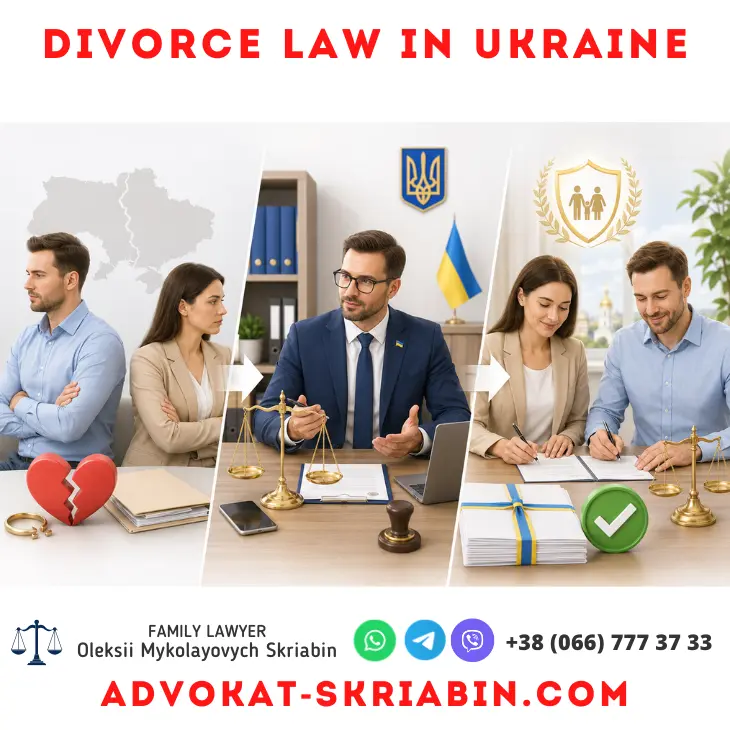
Divorce Law in Ukraine: Legal Rules for Marriage Dissolution
Divorce is one of the most important legal procedures affecting personal status, parental rights, property ownership, and future family relationships. Understanding divorce law in Ukraine helps spouses avoid procedural mistakes, protect their rights, and complete their marriage dissolution process with fewer delays.
For many Ukrainian citizens living in Ukraine and abroad, divorce is not only an emotional challenge but also a legal process that requires compliance with specific rules established by national legislation. Depending on the circumstances, marriage dissolution in Ukraine may take place through a civil registry office or through court proceedings.
Today, many spouses also use a specialized online divorce service to prepare documents, receive legal guidance, and complete procedural steps remotely when personal attendance is difficult or impossible.
This article explains how the divorce procedure in Ukraine works, what legal grounds exist for terminating a marriage, which documents are required, how online filing operates, and what consequences divorce may have for children, property, and international family matters.
What Does Divorce Law in Ukraine Regulate
Divorce law in Ukraine regulates the legal termination of a marriage and establishes the procedures that spouses must follow to dissolve their marital relationship. These legal rules determine when a marriage may be ended, which authority has jurisdiction, and what rights and obligations remain after divorce.
The legislation also governs issues related to children, parental responsibilities, property ownership, maintenance obligations, and procedural safeguards intended to protect both spouses. In practice, divorce law in Ukraine is closely connected with other areas of family law because marriage dissolution often affects several legal relationships simultaneously.
The primary purpose of Ukrainian divorce legislation is to ensure that marriage termination occurs legally, fairly, and with respect for the rights of all parties involved. Courts and civil registry offices are required to follow these legal principles when processing divorce applications.
Which Family Code Articles Govern Divorce in Ukraine
The Family Code of Ukraine divorce provisions form the legal foundation for marriage dissolution. These provisions establish the rights of spouses to terminate a marriage and define the procedural requirements applicable to different situations.
Several articles of the Family Code regulate voluntary divorce, court-based divorce proceedings, protection of children’s interests, and legal consequences arising after marriage termination. Together, these provisions create a structured legal framework that courts and civil registry authorities apply when considering divorce cases.
The Family Code also emphasizes the principle that no individual should be forced to remain in a marriage against their will. This principle plays a significant role in cases where one spouse opposes the divorce or attempts to delay the process. Individuals interested in reviewing the current legislation may consult the official legislative database maintained by the Verkhovna Rada of Ukraine.
Legal Grounds for Marriage Dissolution Under Ukrainian Law
Marriage dissolution in Ukraine may occur when spouses jointly decide to terminate their marriage or when one spouse concludes that continuation of family relations is impossible. Ukrainian law does not require proof of serious misconduct, fault, or specific wrongdoing by either spouse. Courts generally focus on whether family relations have effectively ceased and whether preserving the marriage serves any practical purpose.
Common circumstances leading to divorce include long-term separation, incompatible views regarding family life, ongoing conflicts, relocation to different countries, financial disagreements, loss of emotional connection, and inability to maintain a stable family relationship.
When considering a divorce case, the court evaluates whether reconciliation remains realistic. If preservation of the marriage is clearly impossible, the court will usually grant the divorce and terminate the marital relationship.
Divorce Through the Civil Registry Office: When Is It Possible
Divorce through civil registry office procedures represents the simplest method of marriage termination under Ukrainian law. However, this option is available only in limited circumstances. Generally, spouses may dissolve their marriage through the civil registry office when both agree to divorce and they do not have common minor children. In such situations, the procedure is administrative rather than judicial, making it significantly less complicated than court proceedings.
The spouses submit a joint application and complete the required registration process. A statutory waiting period applies, providing an opportunity to reconsider the decision before the marriage is officially terminated.
In specific situations established by law, a spouse may also obtain a divorce through the civil registry office without the participation of the other spouse. Such cases usually involve exceptional legal circumstances recognized by family legislation.
Divorce Through Court in Ukraine: Legal Procedure Explained
Divorce through court in Ukraine is required whenever spouses have common minor children, when one spouse refuses to participate in the divorce process, or when the law otherwise requires judicial review. The court procedure begins with the preparation and submission of legal documents. The court then reviews the materials, notifies the parties, and schedules hearings if necessary.
A significant advantage of modern legal practice is that many procedural actions can be completed remotely. Spouses living abroad frequently participate in court divorce proceedings in Ukraine without traveling to Ukraine, depending on the circumstances of the case and the procedural format used.
When legal representation is necessary, it is important to understand the procedural framework. A lawyer represents the client’s interests based on a legal assistance agreement, which may be concluded online. A power of attorney is not required for this purpose. The court ultimately determines whether legal grounds exist for marriage dissolution and issues a judgment terminating the marriage relationship.
Can You Get Divorced Without Your Spouse’s Consent
One of the most common questions asked by spouses facing family disputes is whether a divorce without spouse consent is possible. Ukrainian legislation generally protects an individual’s right to end a marriage, even when the other spouse disagrees with that decision.
If one spouse refuses to cooperate, ignores communications, declines to sign documents, or intentionally delays the process, the matter can usually be resolved through court proceedings. The court’s primary task is not to force reconciliation indefinitely but to determine whether the marriage still exists as a functioning family relationship.
In many cases, the court concludes that continued cohabitation and preservation of the marriage are impossible. When such circumstances are established, the marriage may be dissolved regardless of the objections raised by the opposing spouse.
This principle is especially important for individuals experiencing prolonged separation, relocation abroad, family conflict, or complete cessation of marital relations. In such circumstances, a divorce without the other spouse’s consent may become the realistic legal route.
Divorce Law in Ukraine When Children Are Involved
When children are involved, divorce law in Ukraine places special emphasis on protecting their rights and interests. The termination of a marriage does not affect parental responsibilities toward a child.
Parents remain obligated to participate in the child’s upbringing, education, financial support, and overall well-being. The court may examine living arrangements, parental involvement, communication schedules, and other matters relevant to the child’s best interests.
Contrary to a common misconception, divorce proceedings do not automatically determine which parent is “better.” Instead, the legal system seeks to preserve the child’s relationship with both parents whenever possible.
Where disagreements exist regarding residence, visitation, or parental rights, separate legal proceedings may be necessary. In practice, divorce with children in Ukraine often requires careful legal analysis and evidence-based arguments before the court.
What Documents Are Required for Divorce in Ukraine
The documents for divorce in Ukraine depend on the chosen procedure and the specific circumstances of the spouses. For a standard divorce application, the authorities or court generally require identification documents, information regarding the marriage registration, and supporting materials necessary for the particular procedure. Additional documentation may be needed when children, foreign elements, or property disputes are involved.
Individuals residing abroad frequently ask whether original documents are always required. The answer depends on procedural requirements, available electronic systems, and the nature of the submitted evidence.
Before filing any application, it is advisable to verify the required divorce documents carefully because incomplete submissions may result in procedural delays and additional requests from the court or administrative authority.
How to File for Divorce Online in Ukraine
The development of digital legal services has made online divorce in Ukraine significantly more accessible than in previous years. Depending on the circumstances, certain procedural steps may be completed remotely using electronic communication and online legal support. Online filing is particularly beneficial for Ukrainian citizens residing abroad, military personnel, individuals with limited mobility, and spouses who cannot easily attend legal proceedings in person.
A specialized divorce service can assist with document preparation, procedural guidance, communication with legal representatives, and coordination of required filings. This approach often reduces administrative difficulties while allowing clients to remain informed throughout the process.
In cases requiring legal representation, remote cooperation is generally possible. A lawyer represents the client’s interests based on a legal assistance agreement, which may be concluded online. A power of attorney is not required for this purpose.
How Long Does the Divorce Process Take Under Ukrainian Law
The duration of the divorce procedure in Ukraine depends on several factors, including the chosen procedure, court workload, availability of required documents, and the complexity of the case. Administrative divorce procedures through the civil registry office are generally faster because they involve fewer procedural stages. Court proceedings, by contrast, require judicial review and may involve additional hearings, evidence, or procedural actions.
Cases involving children, property disputes, foreign citizens, or jurisdictional issues frequently require additional time. Delays may also occur if one spouse actively avoids participation or challenges procedural matters.
Although many people seek an exact timeframe, each case should be evaluated individually. Proper preparation of documents and compliance with procedural requirements often contribute to a smoother and more efficient process.
Step-by-Step Guide
- Determine whether your divorce may be completed through the civil registry office or requires court proceedings.
- Collect the documents necessary for your specific marriage dissolution in Ukraine situation, including any child-related or international documentation.
- Prepare the application, petition, or court claim according to the applicable legal procedure.
- Submit the required documents to the competent authority and monitor procedural notifications.
- Participate in the administrative or judicial process, either personally or through legal representation where permitted.
- Obtain the official document confirming the termination of the marriage.
- Review any additional matters involving children, property division, support obligations, or recognition of the divorce abroad if necessary.
Court Fees and Costs of Divorce Proceedings
When planning a divorce, many individuals are concerned about the financial aspects of the procedure. Court fees and related costs depend on the legal route chosen, the nature of the case, and whether additional claims are included within the proceedings.
A straightforward divorce through court in Ukraine is usually less expensive than proceedings involving disputes over children, property, maintenance obligations, or international legal issues. Additional procedural actions may increase overall expenses depending on the complexity of the matter.
It is important to remember that court fees are subject to legislative changes. Therefore, applicants should always verify the current amounts before filing documents. Legal advice can help determine which expenses may arise during a particular case and how to avoid unnecessary procedural costs.
For Ukrainian citizens living abroad, additional expenses may relate to document legalization, translation, certification, or obtaining documents from foreign authorities. In many cases, the cost of divorce in Ukraine should be assessed together with possible document and representation expenses.
Division of Property and Other Legal Consequences of Divorce
Marriage dissolution in Ukraine terminates the marital relationship, but it does not automatically resolve every legal issue connected to family life. Property rights, financial obligations, and parental responsibilities often continue to require legal regulation after the divorce is finalized.
One of the most significant issues involves the division of jointly acquired property. Real estate, vehicles, savings, business interests, and other assets may become the subject of negotiations or separate court proceedings if the spouses cannot reach an agreement.
Divorce may also affect inheritance rights, future financial planning, tax matters, and legal responsibilities toward children. Understanding these consequences before initiating proceedings allows individuals to make informed decisions and avoid unexpected legal complications. In many situations, resolving property matters separately from the divorce itself helps reduce conflict and allows the marriage dissolution process to proceed more efficiently.
International Divorce Cases and Foreign Spouses
International family relationships have become increasingly common, making international divorce cases one of the fastest-growing areas of family law. Such matters often involve Ukrainian citizens residing abroad, foreign spouses, dual-nationality families, or marriages registered outside Ukraine.
Determining jurisdiction is frequently the most important legal question in these cases. Courts must establish whether a Ukrainian court has authority to hear the dispute and which country’s laws may apply to specific aspects of the family relationship.
Additional legal issues may involve recognition of foreign judgments, translation of documents, legalization procedures, international child-related disputes, and enforcement of court decisions in another country.
Individuals involved in international family matters should seek legal guidance as early as possible because procedural mistakes may create significant delays or affect the recognition of a divorce decision in another jurisdiction. This is especially relevant in cases of divorce with a foreigner in Ukraine or when one spouse lives outside Ukraine.
Common Questions About Ukrainian Divorce Legislation
Ukrainian divorce legislation is designed to balance the right to terminate a marriage with the need to protect children, property rights, and procedural fairness. However, many people remain uncertain about how the law applies to their specific circumstances.
Questions frequently arise regarding online filing, participation from abroad, consent requirements, child-related matters, and recognition of foreign divorce decisions. The answers often depend on individual facts rather than a single universal rule.
For this reason, legal analysis of a particular situation is often more valuable than relying on general assumptions or information obtained from unofficial sources. Even cases that appear similar may require different legal approaches.
Understanding the basic principles of divorce law in Ukraine helps individuals communicate more effectively with lawyers, prepare documents properly, and make informed decisions throughout the process.
Why Hire a Family Lawyer for Divorce in Ukraine
Although some divorces appear straightforward, legal representation often helps avoid procedural mistakes, unnecessary delays, and future disputes. A family lawyer for divorce in Ukraine can assess the circumstances of the case, explain available options, and develop a strategy tailored to the client’s objectives.
Legal assistance is particularly valuable when children, international elements, property disputes, or uncooperative spouses are involved. Proper preparation of documents and procedural compliance may significantly improve the efficiency of the process.
For Ukrainians residing abroad, professional legal support can be especially important because personal attendance is not always practical. Remote legal services frequently allow clients to manage divorce proceedings while remaining in another country.
When representation is required, the legal framework is straightforward. A lawyer represents the client’s interests based on a legal assistance agreement, which may be concluded online. A power of attorney is not required for this purpose.
Phone / Viber / WhatsApp / Telegram: +380667773733
Email: skriabinadvokat@gmail.com