
- Do Grandparents Have the Right to Communicate with Grandchildren
- What Does Ukrainian Family Law Say About Grandparents’ Rights
- The Right of a Grandmother to Communicate with Grandchildren
- The Right of a Grandfather to Communicate with Grandchildren
- Can Parents Prohibit Contact with Grandchildren
- Communication with Grandchildren After Parents’ Divorce
- How to Establish a Schedule for Meetings with Grandchildren
- Removing Obstacles to Communication with Grandchildren
- When Can Grandparents Apply to Court
- Court Procedure for Protecting Grandparents’ Rights
- Evidence Needed in a Dispute About Communication with Grandchildren
- Participation of Grandparents in the Upbringing of Grandchildren
- Legal Assistance in Grandparent–Grandchild Contact Cases
- Family Lawyer for Grandparents’ Rights Disputes
- Step-by-Step Guide
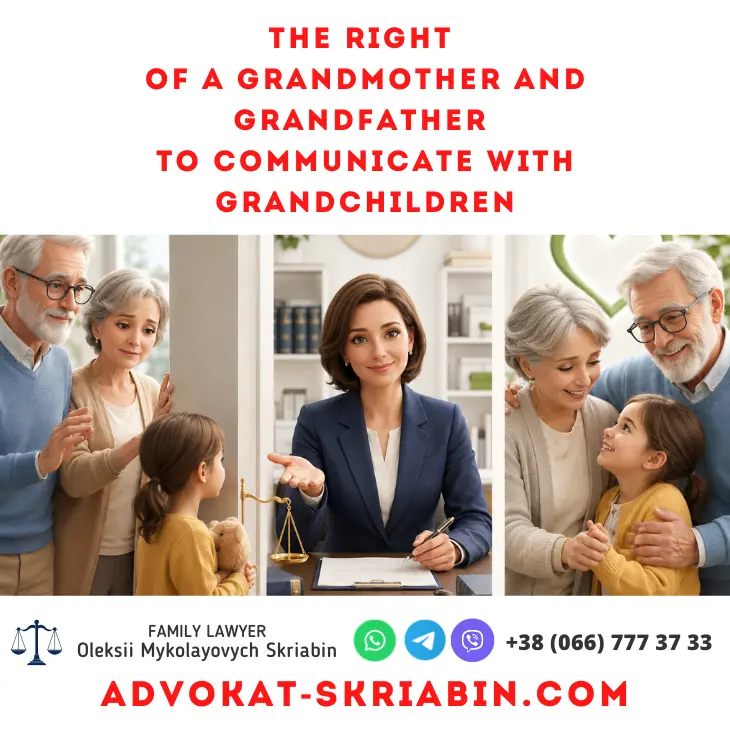

Do Grandparents Have the Right to Communicate with Grandchildren
Under Ukrainian family law, grandparents generally have the right to maintain contact with their grandchildren and participate in their lives. This principle reflects the understanding that children benefit from meaningful relationships with extended family members.
The right of grandparents to communicate with grandchildren is not dependent on whether the child’s parents remain married, divorced, separated, or living in different countries. Family circumstances may affect practical arrangements, but they do not automatically eliminate grandparents’ legal rights.
In practice, communication may take many forms. Personal meetings, video calls, telephone conversations, participation in family events, holidays, educational activities, and other forms of interaction may all help maintain a healthy relationship between grandparents and grandchildren.
However, the child’s interests remain the primary consideration. If disputes arise, authorities and courts generally evaluate whether the proposed communication arrangement supports the child’s emotional, psychological, and social well-being. In related family conflicts, a legally structured child visitation schedule may also help relatives understand how communication with a child can be organized in practice.
What Does Ukrainian Family Law Say About Grandparents’ Rights
Ukrainian family legislation recognizes the importance of preserving family connections between children and their grandparents. The law establishes that grandparents may communicate with grandchildren and participate in their upbringing when such involvement serves the child’s interests.
Parents are expected to respect these family relationships. Although parents have primary responsibility for raising their children, this responsibility does not automatically allow them to disregard the legitimate interests of grandparents.
Family law also provides mechanisms for resolving disputes when communication becomes restricted. If informal discussions fail, grandparents may seek legal protection and request the establishment of clear arrangements concerning communication and visits.
Additional information about Ukrainian family legislation can be found through the official legislative portal of Ukraine, where the Family Code, Civil Procedure Code, Civil Code, and other laws are published.
Understanding these legal principles is important because many conflicts arise from misunderstandings rather than actual legal limitations. Knowing the legal framework often helps families reach practical solutions without escalating disputes.
The Right of a Grandmother to Communicate with Grandchildren
The right of a grandmother to communicate with grandchildren is protected in the same manner as the rights of other close relatives. Grandmothers often play a central role in family life, providing care, emotional support, and continuity of family traditions.
In many families, a grandmother develops a particularly close relationship with grandchildren from an early age. When contact is suddenly interrupted due to family conflict, relocation, or divorce, both the grandmother and the child may experience emotional distress.
The existence of disagreements between adults does not automatically justify the complete termination of communication. Each situation should be assessed individually, with consideration given to the child’s welfare and existing family bonds. Where obstacles arise, a grandmother may request assistance through negotiation, mediation, or legal procedures designed to restore communication and preserve the relationship with the child.
The Right of a Grandfather to Communicate with Grandchildren
The right of a grandfather to communicate with grandchildren enjoys the same legal protection. Grandfathers often contribute significantly to a child’s upbringing through mentorship, education, recreational activities, and emotional guidance.
A strong relationship with a grandfather can positively influence a child’s development, confidence, and understanding of family values. For this reason, courts generally consider the preservation of such relationships an important factor when resolving family disputes.
Difficulties frequently arise when parents separate or when one parent relocates with the child. In these situations, communication may become limited despite a previously active relationship between the grandfather and grandchild.
If voluntary arrangements cannot be reached, legal mechanisms may help establish a practical framework that allows communication while respecting the child’s routine, education, and overall well-being.
Can Parents Prohibit Contact with Grandchildren
Parents have significant authority regarding decisions affecting their children, but this authority is not unlimited. A complete prohibition on communication with grandparents may be challenged when it lacks reasonable justification and negatively affects established family relationships.
Each case depends on its specific circumstances. Courts and relevant authorities generally consider the child’s interests, previous level of contact, emotional attachment, and the reasons provided for restricting communication.
Sometimes parents restrict communication because of disputes with grandparents rather than concerns about the child. In such situations, decision-makers may distinguish between conflicts among adults and the child’s independent interest in maintaining family relationships.
When communication has been unfairly restricted, grandparents may seek the removal of obstacles to communication with grandchildren through legal procedures designed to restore contact and protect family ties. In similar disputes, legal support concerning removing obstacles in communicating with the child may be relevant when one adult blocks contact without sufficient grounds.
Communication with Grandchildren After Parents’ Divorce
Communication with grandchildren after divorce is one of the most common sources of family disputes. Following separation, family dynamics often change significantly, especially when one parent becomes the primary caregiver.
Divorce does not automatically terminate the relationship between grandparents and grandchildren. In most situations, grandparents remain important members of the child’s extended family and may continue to play a meaningful role in the child’s life.
Challenges often arise when contact becomes dependent on one parent’s willingness to facilitate communication. Geographic relocation, emotional tension, and disagreements concerning parenting decisions can create additional barriers.
Despite these difficulties, maintaining regular contact with grandparents frequently provides children with stability during periods of family transition. When family conflict is connected with divorce and parenting issues, the article on husband, wife, children before and after divorce may help explain how the interests of children remain central after marital separation.
How to Establish a Schedule for Meetings with Grandchildren
A clearly defined schedule of meetings with grandchildren often helps prevent misunderstandings and future conflicts. When expectations are transparent, both parents and grandparents know how communication will take place and what responsibilities each party has.
The schedule may include personal visits, weekends together, participation in family celebrations, video calls, school events, holidays, and other forms of interaction. The exact format should take into account the child’s age, educational commitments, health, and daily routine.
Whenever possible, families should try to reach an agreement voluntarily. A mutually accepted schedule is usually more effective than arrangements imposed through legal proceedings because it encourages cooperation rather than confrontation.
If an agreement cannot be reached, the court may establish a communication schedule that balances the interests of the child, parents, and grandparents while ensuring regular contact. In some situations, the procedure for communication with a child through the guardianship authority may also be relevant before or alongside court protection.
Removing Obstacles to Communication with Grandchildren
Removal of obstacles to communication with grandchildren becomes relevant when grandparents face repeated refusals, blocked communication, cancelled visits, or other actions that prevent meaningful contact with a child.
Obstacles may arise in different ways. Some grandparents are denied personal meetings, while others experience restrictions on telephone conversations, video communication, or participation in important family events. In international families, geographical distance may create additional challenges.
Before initiating legal proceedings, it is often advisable to document attempts to maintain communication and to seek constructive dialogue with the parents. Courts generally appreciate evidence showing that grandparents made reasonable efforts to resolve the matter peacefully. When restrictions continue without valid justification, grandparents may pursue legal remedies designed to restore communication and protect established family relationships.
When Can Grandparents Apply to Court
Grandparents may consider court proceedings when communication has become impossible despite repeated attempts to resolve the issue through discussions and voluntary agreements. A court application is commonly appropriate when one or both parents systematically prevent meetings, ignore communication requests, or refuse to comply with previously agreed arrangements. In some situations, grandparents may also seek court intervention when a child is being intentionally isolated from extended family members.
The court’s role is not to punish parents but to determine whether maintaining communication serves the child’s interests and whether restrictions are justified by specific circumstances. Because each family situation is unique, legal advice before filing a claim can help identify the most effective strategy and avoid procedural mistakes.
Court Procedure for Protecting Grandparents’ Rights
The court procedure for communication with grandchildren generally begins with the preparation of legal documents explaining the relationship between the grandparents and the child, the nature of the dispute, and the requested communication arrangements.
The court evaluates evidence from all parties, including parents, grandparents, and, where appropriate, child welfare authorities. The primary focus remains the best interests of the child rather than the personal preferences of adults involved in the dispute. During proceedings, the court may consider previous contact between the parties, the child’s needs, family circumstances, and the practicality of the proposed communication schedule.
A properly prepared case supported by relevant evidence can significantly improve the likelihood of obtaining a balanced and enforceable decision. If a final decision is issued, understanding how to obtain a court decision may be important for further enforcement or practical use of the judgment.
Evidence Needed in a Dispute About Communication with Grandchildren
Evidence plays an important role in any dispute concerning communication between grandparents and grandchildren. The stronger the evidence, the easier it becomes to demonstrate the existence of a meaningful relationship and the impact of communication restrictions.
Relevant evidence may include:
- Photographs, correspondence, and records of previous communication.
- Messages showing attempts to arrange meetings.
- Testimony from relatives, teachers, neighbors, or other individuals familiar with the relationship.
- Documents confirming participation in the child’s upbringing, education, or care.
Courts generally look for objective information demonstrating that communication existed before the conflict and that maintaining the relationship would benefit the child. Well-organized evidence often helps present a clear picture of the family situation and supports requests for a formal communication schedule.
Participation of Grandparents in the Upbringing of Grandchildren
The participation of grandparents in raising grandchildren extends beyond occasional visits. Grandparents often contribute to a child’s moral development, education, cultural identity, and emotional security.
Many families rely on grandparents for assistance with childcare, school activities, extracurricular programs, and everyday support. Their involvement can create a valuable sense of continuity and stability for children.
The extent of participation naturally varies depending on family circumstances. Some grandparents live nearby and interact frequently, while others maintain close relationships through regular communication from abroad. Regardless of the specific arrangement, maintaining healthy family connections often benefits children by providing additional emotional support and strengthening family identity.
Legal Assistance in Grandparent–Grandchild Contact Cases
Disputes involving communication with grandchildren are often emotionally sensitive and legally complex. Professional legal assistance may help grandparents understand their rights, assess available options, and develop an effective strategy.
A lawyer can analyze the facts of the case, prepare legal documents, organize evidence, communicate with other parties, and represent the client’s interests throughout negotiations or court proceedings.
In many situations, early legal guidance helps avoid unnecessary escalation and increases the likelihood of reaching a practical solution that preserves family relationships. When court proceedings become necessary, proper preparation can significantly reduce procedural risks and improve the overall quality of legal protection.
If representation is required, it is important to remember: A lawyer represents the client’s interests on the basis of a legal assistance agreement, which may be concluded online. A power of attorney is not required for this purpose.
Family Lawyer for Grandparents’ Rights Disputes
A family lawyer for grandparents’ rights disputes can provide valuable support when communication with grandchildren becomes restricted or entirely blocked. Family disputes often involve not only legal issues but also emotional tensions between relatives. An experienced lawyer helps maintain focus on legally relevant facts while protecting the client’s interests in a professional manner.
Legal assistance may include negotiations, preparation of legal claims, collection of evidence, communication with authorities, and representation in court proceedings concerning grandparents’ rights to see grandchildren.
Timely legal advice frequently helps identify practical solutions that preserve family relationships while protecting the child’s interests and well-being. In complex family disputes, a family law attorney can help assess the situation, prepare documents, and choose the most appropriate legal strategy.
Step-by-Step Guide
- Assess the current situation and determine what restrictions on communication exist.
- Attempt to resolve the issue through direct communication with the child’s parents.
- Collect documents and evidence confirming the relationship with the grandchild and previous communication.
- Develop a realistic proposal regarding the desired schedule of meetings and communication.
- Seek professional legal advice to evaluate available options and procedural requirements.
- If negotiations fail, prepare and submit the necessary court documents.
- Participate in the proceedings and present evidence supporting the child’s interest in maintaining family relationships.
Phone / Viber / WhatsApp / Telegram: +380667773733
Email: skriabinadvokat@gmail.com