- How Can Ukrainians Get Divorced in Lithuania
- Who Can File for Divorce in Lithuania
- Divorce in Lithuania for Ukrainians: Main Legal Options
- Can You Apply for Divorce in Lithuania Online
- What Documents Are Required for Divorce in Lithuania
- Divorce in Lithuania Without Returning to Ukraine
- Divorce in Lithuania With Children: What You Should Know
- Divorce by Mutual Consent in Lithuania
- Can You Get Divorced in Lithuania Without Your Spouse’s Consent
- How Long Does the Divorce Process Take in Lithuania
- Cost of Divorce in Lithuania for Ukrainians
- Recognition of a Lithuanian Divorce in Ukraine
- Apostille and Legalization of Divorce Documents From Lithuania
- Divorce From a Foreigner in Lithuania
- How a Family Lawyer Can Help With Divorce in Lithuania
- Step-by-Step Guide
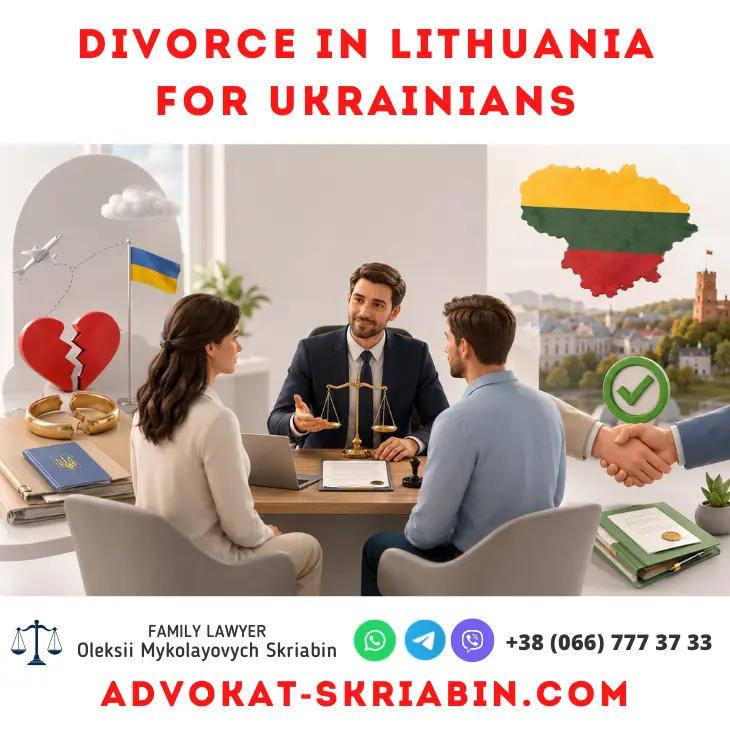
How Can Ukrainians Get Divorced in Lithuania
Many Ukrainian citizens have relocated to Lithuania and established their residence there. As a result, questions about divorce of Ukrainians abroad have become increasingly common. In many situations, Lithuanian courts may have jurisdiction to consider family disputes involving Ukrainian citizens who legally reside in Lithuania.
The exact procedure depends on several factors, including the spouses’ place of residence, citizenship, whether children are involved, and whether both spouses agree to end the marriage. Because every family situation is different, determining the correct legal route at the beginning is extremely important.
When considering how to get divorced in Lithuania, spouses should first determine whether they qualify to start proceedings in Lithuania or whether another country has jurisdiction over the case. This issue affects both the procedure and the recognition of the final decision in other countries.
For many families living abroad, obtaining legal guidance before filing helps avoid delays, unnecessary expenses, and procedural mistakes. In similar international cases, spouses often compare the Lithuanian procedure with how Ukrainians can get divorced abroad to understand which country has the most practical legal connection to their family situation.
Who Can File for Divorce in Lithuania
The right to file for divorce in Lithuania is generally available to spouses who meet the jurisdictional requirements established under Lithuanian law and applicable international rules. In practice, courts usually examine where the spouses live, where they last lived together, and other relevant connecting factors.
A Ukrainian citizen residing in Lithuania may often initiate proceedings there even if the other spouse remains in Ukraine or lives in another country. However, each case should be assessed individually because cross-border family disputes frequently involve international jurisdiction issues.
Where one spouse has stronger connections with Lithuania than the other, additional procedural questions may arise. This is especially common in cases involving mixed-nationality marriages or long-term residence abroad. Before filing documents, it is advisable to confirm that Lithuania is the appropriate forum for the divorce case. This reduces the risk of jurisdictional objections and unnecessary delays.
Divorce in Lithuania for Ukrainians: Main Legal Options
Divorce in Lithuania for Ukrainians may take different forms depending on the circumstances of the marriage. The legal route chosen can significantly affect the duration and complexity of the proceedings.
The simplest situation usually involves spouses who both agree that the marriage should end and who have already settled key family issues. Mutual agreement often allows for a smoother and more predictable procedure.
More complicated cases arise when there are disagreements regarding children, finances, property, or the termination of the marriage itself. In such situations, the court may need to review evidence and resolve disputes before issuing a final decision.
Understanding the available legal options at an early stage allows spouses to prepare realistic expectations regarding the process and its potential outcome. If the case has a Ukrainian legal connection, it may also be useful to compare it with the divorce procedure in Ukraine to understand how foreign and Ukrainian procedures may interact.
Can You Apply for Divorce in Lithuania Online
Many Ukrainians living abroad are interested in an online divorce in Lithuania because personal attendance may be difficult due to work, travel restrictions, family obligations, or residence in another country.
Whether a divorce can be handled remotely depends on the circumstances of the case, the court’s requirements, and the available procedural mechanisms. In some situations, documents may be submitted electronically and communication with legal representatives may take place remotely.
Remote legal assistance has become increasingly important for international families. A properly organized case may significantly reduce the need for physical appearances and unnecessary travel.
Where representation is required, it is important to remember the following rule:A lawyer represents the client’s interests on the basis of a legal assistance agreement, which can be concluded online. A power of attorney is not required for this.
The online divorce service may also help coordinate document collection, communication, and procedural preparation for spouses living in different countries. For Ukrainian-related cases, similar remote mechanisms are often discussed in the context of online divorce in Ukraine, especially when spouses want to avoid unnecessary travel.
What Documents Are Required for Divorce in Lithuania
The exact documents for divorce in Lithuania depend on the nature of the case, but several categories of documents are commonly required. Typical documentation may include identification documents, proof of marriage, information regarding residence, and documents relating to children if the spouses have minor children together. Foreign-language documents may need certified translations depending on procedural requirements.
Where documents were issued in Ukraine, additional formalities may sometimes be required before they can be used in Lithuanian proceedings. The need for legalization or apostille depends on the specific document and applicable international agreements.
Before submitting an application, it is advisable to verify that all documents are complete, consistent, and properly translated. Errors in documentation frequently lead to avoidable delays. In practice, spouses often need to prepare divorce documents in advance, especially when documents were issued in different countries.
Divorce in Lithuania Without Returning to Ukraine
One of the most common concerns among displaced families is whether divorce in Lithuania without returning to Ukraine is legally possible. In many situations, Ukrainian citizens who legally reside abroad can handle family matters through local procedures without travelling back to Ukraine. The availability of this option depends on jurisdictional rules and the specific facts of the case.
For spouses living in different countries, remote communication and professional legal assistance often simplify the process. This is especially relevant where travel is impractical or where one spouse has already established long-term residence in Lithuania.
A carefully planned strategy can help ensure that the divorce process proceeds efficiently while protecting the interests of both spouses and any children involved. If a Ukrainian legal route remains relevant, spouses may also consider divorce without presence as a practical alternative where personal attendance creates difficulties.
Divorce in Lithuania With Children: What You Should Know
Divorce in Lithuania with children requires special attention because courts prioritize the rights and welfare of the child when considering family disputes. Parents are often expected to address issues such as residence arrangements, parental responsibilities, communication with the child, and financial support. Courts generally seek solutions that serve the child’s best interests rather than the preferences of either parent.
Where parents can cooperate and reach agreements regarding child-related matters, proceedings are usually more straightforward. However, disputes concerning custody or parental involvement may significantly increase the complexity of the case.
For international families, additional cross-border considerations may arise, especially when one parent intends to reside in another country after the divorce. In Ukrainian-related family disputes, parents often separately analyze divorce with children because child-related issues may affect jurisdiction, documents, and recognition of decisions.
Divorce by Mutual Consent in Lithuania
Divorce by mutual consent is generally considered the least stressful option for spouses who have jointly decided to end their marriage. When both parties agree on the divorce and key family matters, the process is usually more predictable and less confrontational.
For Ukrainians living abroad, this approach often allows family disputes to be resolved with fewer procedural complications. Courts typically review whether the agreement is voluntary and whether the interests of children, if any, are adequately protected.
Even where there is complete agreement between spouses, proper preparation of documents remains important. Inaccurate paperwork can still lead to delays despite the absence of conflict. Many people searching for how to get divorced in Lithuania discover that mutual consent cases are often resolved more efficiently than contested proceedings. Where Ukrainian law may also be relevant, spouses often compare this option with divorce by mutual consent to understand the difference between agreed and disputed procedures.
Can You Get Divorced in Lithuania Without Your Spouse’s Consent
Іn certain situations it may be possible to file for divorce in Lithuania even when the other spouse does not support the termination of the marriage. The absence of consent does not automatically prevent divorce proceedings. However, the court may require additional evidence and a more detailed examination of the circumstances that led to the breakdown of the marital relationship.
Contested divorces frequently involve longer proceedings because the court must evaluate the positions of both spouses before reaching a decision. Additional disputes regarding children or property may further complicate the case. For this reason, spouses involved in contested proceedings should prepare carefully and ensure that their legal position is clearly documented.
How Long Does the Divorce Process Take in Lithuania
The duration of divorce in Lithuania for Ukrainians depends on numerous factors. These include court workload, the complexity of the dispute, the existence of children, and whether both spouses cooperate during the proceedings.
Cases based on mutual agreement generally move faster because there are fewer disputed issues requiring judicial review. Contested divorces usually take longer because additional hearings, evidence, and procedural steps may be necessary.
International elements can also influence timing. For example, obtaining documents from another country, arranging translations, or resolving jurisdictional questions may extend the process. Although many people seek exact timelines, each case should be evaluated individually because procedural requirements vary significantly.
Cost of Divorce in Lithuania for Ukrainians
The cost of divorce proceedings can vary depending on the circumstances of the case and the services required. Potential expenses may include court fees, document translation costs, apostille expenses, legal representation, and other procedural costs. Cases involving international elements often require additional administrative work.
A straightforward divorce by mutual consent is usually less expensive than a contested dispute involving children, property, or jurisdictional questions. Before starting proceedings, it is advisable to obtain a clear understanding of potential costs and procedural requirements so that financial expectations remain realistic.
Recognition of a Lithuanian Divorce in Ukraine
Recognition of divorce in Ukraine after Lithuania is one of the most important issues for Ukrainian citizens living abroad. In many situations, a divorce legally obtained in Lithuania can be recognized in Ukraine. The specific procedure depends on the nature of the divorce decision, international agreements, and applicable Ukrainian legal requirements.
Recognition may be particularly important when updating civil status records, entering into a new marriage, resolving inheritance matters, or dealing with property-related issues in Ukraine. Because recognition procedures can vary depending on the circumstances, it is advisable to verify the legal effect of the Lithuanian divorce before relying upon it in Ukraine. In many cases, spouses need to understand the procedure for recognition in Ukraine of a foreign court decision on divorce before using Lithuanian divorce documents in Ukraine.
Apostille and Legalization of Divorce Documents From Lithuania
After obtaining a divorce decision, spouses frequently need official documents for use in another country. This is where apostille and legalization issues become relevant. Whether an apostille is required depends on the type of document and the legal framework governing its international use. In many cases, official divorce documents intended for use abroad must satisfy specific authentication requirements.
Incorrectly prepared documents may create difficulties during recognition procedures or administrative registrations. Therefore, attention to formal requirements is essential. Where documents will be used in Ukraine, it is advisable to verify in advance whether apostille procedures or certified translations are required. For Ukrainian state procedures connected with civil status records, apostille and registration issues may also be checked through the Ministry of Justice of Ukraine, especially when documents concern DRACS records, legalization, or registration actions.
Divorce From a Foreigner in Lithuania
Divorce from a foreigner in Lithuania often involves additional legal considerations because multiple legal systems may be connected to the marriage. Questions concerning jurisdiction, applicable law, child-related matters, and enforcement of decisions frequently arise in international marriages. These issues become even more important when spouses reside in different countries.
The court may need to assess which country has authority to hear the case and whether any international regulations affect the proceedings. Despite these complexities, many international divorces can be successfully resolved through proper planning and compliance with procedural requirements.
How a Family Lawyer Can Help With Divorce in Lithuania
A family lawyer can assist at every stage of divorce proceedings, from the initial assessment of jurisdiction through the preparation of documents and representation before authorities or courts. Legal assistance is particularly valuable in cases involving children, foreign elements, recognition procedures, or disagreements between spouses. Professional guidance often helps ensure compliance with procedural requirements and reduces the risk of costly mistakes.
Where legal representation is required, it is important to remember: A lawyer represents the client’s interests on the basis of a legal assistance agreement, which can be concluded online. A power of attorney is not required for this. For Ukrainians living abroad, professional support may significantly simplify communication, document preparation, and procedural compliance.
Step-by-Step Guide
- Determine whether Lithuania has jurisdiction over your divorce case and whether proceedings can be initiated there.
- Collect the necessary documents, including identification papers, marriage documents, and child-related records if applicable.
- Assess whether the divorce will proceed by mutual consent or whether disputes exist that require judicial resolution.
- Prepare and submit the required application and supporting documentation.
- Complete any translation, apostille, or authentication requirements relating to foreign documents.
- Participate in the necessary procedural stages, either personally or through legal representation where permitted.
- Obtain the final divorce documents and determine whether recognition in Ukraine is required.
Phone / Viber / WhatsApp / Telegram: +380667773733
Email: skriabinadvokat@gmail.com